
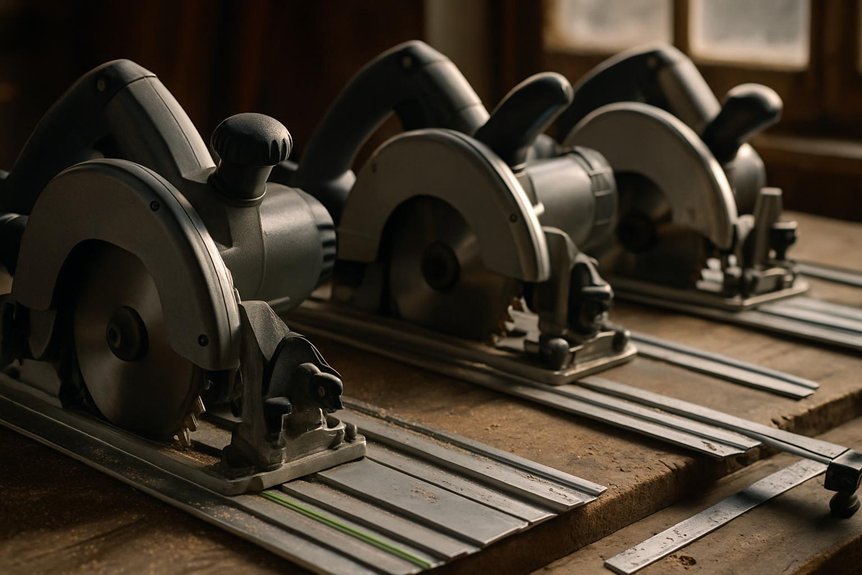
If you’re a woodworking enthusiast looking to elevate your craft, choosing the right tool for precise cuts is essential. A track saw is your best bet for achieving cleaner, more accurate results than a standard circular saw.
It offers the advantage of guided straight cuts, minimizes tear-out, and simplifies bevel work, allowing you to tackle panels and trim with ease and confidence.
In this roundup, we’ll explore three top track saw options that cater to various needs and budgets: the wallet-friendly WEN 7.25″, the versatile cordless RYOBI ONE+ HP, and the powerful DEWALT 60V MAX.
Each of these saws excels in delivering precision and efficiency, but your choice will ultimately depend on factors like budget, portability, and specific cutting requirements.
Whether you’re a hobbyist or a professional, finding the right track saw can significantly impact your woodworking projects.
Let’s dive into our selections and discover the perfect tool to enhance your workshop capabilities. Scroll down to explore our top picks!
WEN 7.25-Inch Track Saw, Variable Speed (CT1274), Corded Electric
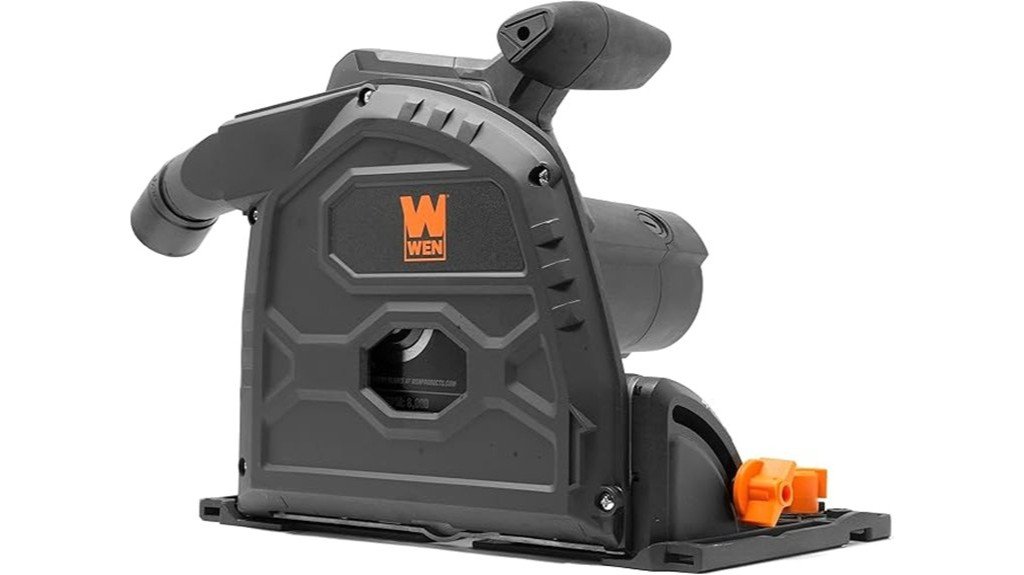
If you’re looking for an affordable, entry-level track saw that still delivers clean, accurate plunge cuts, the WEN 7.25-Inch CT1274 is a strong choice—its 12-amp motor and variable speed control (2,000–6,000 RPM) give you the power and fine-tuning needed for a range of materials, while the included 40-tooth carbide blade and precision base let you make smooth, repeatable cuts along compatible tracks; compact and relatively lightweight at 13.3 pounds, it’s especially well suited to hobbyists, DIYers, and small-shop woodworkers who want the benefits of track-guided cutting without the higher cost of pro-grade systems. You’ll get plunge cuts to 2.6 inches and 45-degree bevels to 1.85 inches, plus a 360-degree dust port adapter that ties into common vacuums for cleaner work. The saw accepts standard 7-1/4-inch blades with 5/8-inch arbors, glides in precision grooves, and can operate standalone when tracks aren’t practical. Users praise value and cut quality, though pros may notice less power than high-end models; a two-year limited warranty adds useful protection.
Best For: Hobbyists, DIYers, and small-shop woodworkers who want an affordable track-guided plunge saw that delivers clean, repeatable cuts without the cost of pro-grade systems.
Pros:
- Affordable entry-level track saw with a 12-amp motor and variable speed (2,000–6,000 RPM) for versatile cutting.
- Includes a 40-tooth carbide blade, precision base with track-compatible grooves, and a 360-degree dust port for cleaner work.
- Compact and relatively lightweight (13.3 lbs), accepts standard 7-1/4″ blades, and offers plunge cuts to 2.6″ and 45° bevels to 1.85″.
Cons:
- Less powerful and durable than higher-end professional track saws, which may limit heavy or continuous use.
- Track clamps and tracks sold separately (requires compatible WEN tracks/clamps for full track-guided functionality).
- Some users report occasional performance limitations compared to premium models (e.g., cutting speed or long-term robustness).
RYOBI ONE+ HP 18V Brushless 6-1/2 in. Cordless Track Saw (Tool Only)
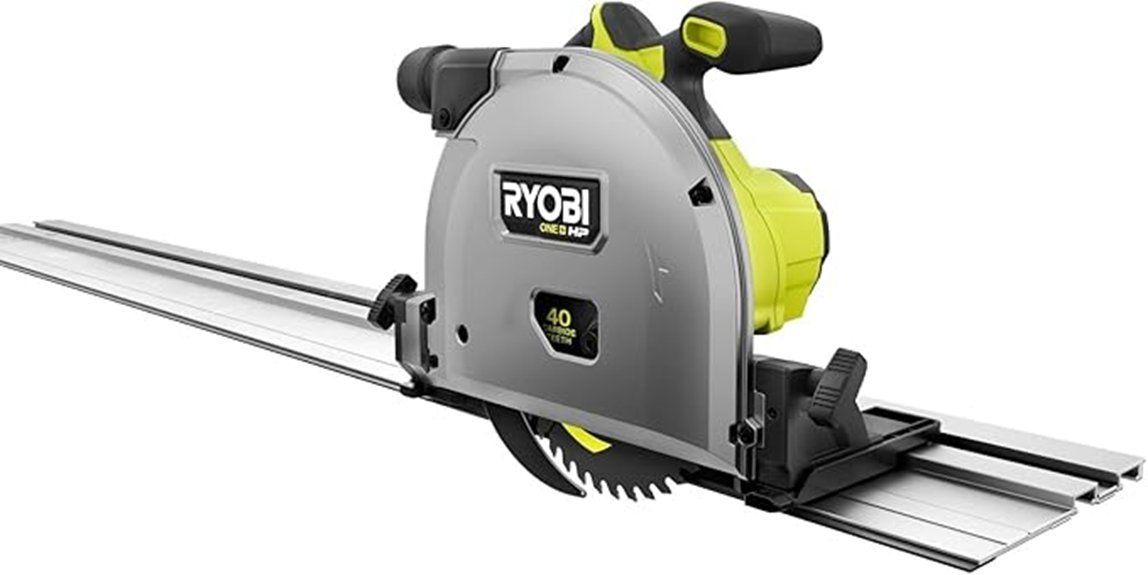
The RYOBI ONE+ HP 18V Brushless 6-1/2 in. cordless track saw gives you portable, powerful cutting without a cord. It reaches up to 4,300 RPM, so you’ll get controlled, accurate cuts and a clean finish. With a maximum depth of cut of 1-15/16 in. at 90° when used with the track, it handles sheet goods and thicker stock comfortably. The kit includes two 27.5 in. tracks you can combine for up to 55 in. of guided cutting, keeping long rip cuts straight and reliable. You can also tilt the blade from 1° to 48° for bevel work.
Best For: DIYers and professional contractors who need a portable, accurate track saw for ripping sheet goods and making bevel cuts without a cord.
Pros:
- Cordless 18V brushless motor delivers up to 4,300 RPM for controlled, clean cuts.
- Includes two 27.5 in. tracks that combine to a 55 in. guided cutting length for long rip cuts.
- Deep cutting capacity (up to 1-15/16 in. at 90°) and 1°–48° bevel range for versatile material handling.
Cons:
- Tool-only package requires purchase of battery and charger separately.
- 6-1/2 in. blade limits maximum depth compared with larger track saws for very thick stock.
- Track lengths may be short for some users who need longer continuous guides without adding extra tracks.
DEWALT 60V MAX 6-1/2-Inch Cordless TrackSaw (DCS520B)
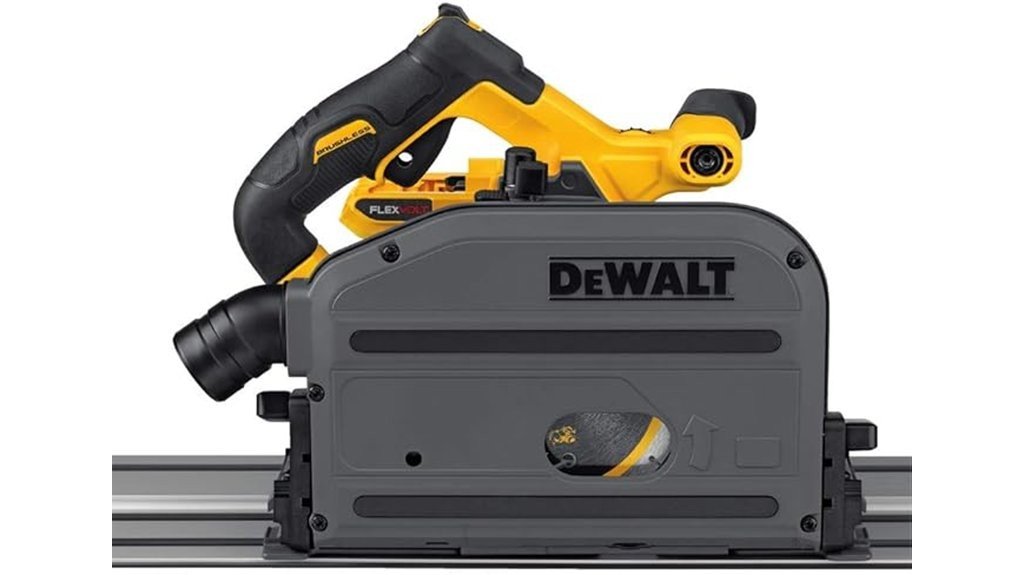
Woodworkers who need cordless power and precision will appreciate the DEWALT 60V MAX 6-1/2-Inch Cordless TrackSaw (DCS520B), a baretool that pairs a high-torque brushless motor with a zero-clearance track system to deliver straight, splinter-free cuts in hardwoods up to 2-1/8 inches thick. You’ll find a 6-1/2-inch blade, 1750–4000 RPM range, and a 47° bevel capacity in a 12.5-pound package designed for use with dual-edged tracks. Safety features include a continuous anti-kickback mechanism, riving knife, and robust plunge action, while enclosed guards claim 90% dust extraction. Users praise power and smoothness; battery life is the main concern.
Best For: Woodworkers and contractors who need cordless precision cuts on-site, especially when using track systems for splinter-free rip and crosscuts in hardwoods up to 2-1/8″ thick.
Pros:
- Brushless 60V motor with 1750–4000 RPM delivers powerful, smooth cutting and can handle hardwoods up to 2-1/8″ thick.
- Zero-clearance dual-edged track compatibility provides straight, splinter-free cuts and a 47° bevel capacity for versatile joinery.
- Safety and dust control features (continuous anti-kickback, riving knife, plunge mechanism, and enclosed guard with ~90% dust extraction) improve usability and jobsite cleanliness.
Cons:
- Sold as a bare tool—battery not included, and users report concerns about battery longevity and run time.
- Heavier than some portable saws at 12.5 lbs, which may be fatiguing for extended overhead or handheld use.
- Some users note potential compatibility/fit issues with future or different track systems despite general cross-compatibility reports.
Factors to Consider When Choosing Track Saws for Woodworking
When you’re choosing a track saw, you’ll want to weigh several key factors—cutting depth capacity and motor power output determine what materials and thicknesses you can handle, while blade size compatibility affects the range of cuts you can make. Also consider how the saw mates with your track system and whether its bevel and plunge range match the angles and precision you need for projects. Taking these elements together helps you pick a saw that balances performance, versatility, and accuracy for your woodworking tasks.
Cutting Depth Capacity
Although cutting depth might seem like a simple spec on a spec sheet, it directly determines what thicknesses you can cut and how versatile your track saw will be for different projects, so it’s worth understanding beyond the headline number. You’ll commonly see maximum depths around 1-15/16″ to 2-1/8″ at 90 degrees, which guides whether you can slice plywood, hardwood panels, or thicker stock in one pass. Remember bevel cuts reduce usable depth—many saws tilt to 45°, so anticipate shallower capacity when angling. Variable speeds help you control cut quality across materials, while blade design and motor type influence actual performance. Finally, use a compatible, well-aligned track system to maintain stability and achieve accurate, clean cuts at the depth you set.
Motor Power Output
Motor power output is one of the most practical specs to check because it directly affects how confidently you’ll tackle dense hardwoods, thick panels, or long rip cuts; manufacturers usually list power in amps for corded models and volts for cordless systems, and higher numbers generally mean more cutting force and steadier performance under load. Look for a 12-amp corded saw if you plan frequent heavy work, since it delivers robust cutting power; with cordless tools, compare battery voltages and expect varying output. Prefer brushless motors for better efficiency, higher torque, and longer runtime, which keeps cuts cleaner under sustained load. Also consider variable speed ranges—roughly 2,000–6,000 RPM—to match speed to material and improve control.
Blade Size Compatibility
Power and speed matter, but matching your track saw to the right blade size will determine how effectively you cut through different materials and how clean those cuts look. You’ll commonly find 6-1/2″ and 7-1/4″ blades; choose one that matches your intended cutting capacity and material type so the saw can reach required depths. Check arbor size — most track saws use a 5/8″ arbor — to guarantee the blade fits securely. Match tooth count to the job: more teeth give smoother crosscuts, fewer teeth cut faster for ripping. Pick blade construction for the work—carbide-tipped for hardwoods, specialty blades for melamine or laminate. Finally, verify blades work within your saw’s max cutting depth and bevel limits for safe, effective performance.
Track System Compatibility
When you’re choosing a track saw, make sure the tool and track system are truly compatible, since manufacturers often use different profiles, rail widths, and anti-slip features that affect fit and performance. Check whether the saw’s base mates securely with your rails and whether clamps and connectors line up; poor fit wastes time and undermines accuracy. Pick models like the WEN that accept multiple track lengths and clamp types if you want flexibility across projects. Verify zero‑clearance designs to reduce splintering and improve edge quality when paired with the correct track. Also confirm adjustable depth settings and bevel capacities, and note maximum cut depths at 90° and 45° so you can confidently cut the material thickness and angles your work requires.
Bevel and Plunge Range
Once you’ve confirmed that your saw and rails mate securely and that clamps and connectors line up, check the bevel and plunge ranges to match the cuts you’ll actually make. Bevel capacity typically spans about 1° to 48°, so choose a saw that covers the angled cuts your projects require, whether subtle slopes or steep miters. Plunge capability often reaches depths up to 2.6 inches at 90°, giving you flexibility for thicker stock, and many models deliver about 1-5/8 inches at 45°, useful for precise mitered edges. Look for fine adjustability in plunge depth so you can set exact cuts, particularly in layered materials, and prioritize saws that produce clean, controlled plunges to minimize tear-out and preserve surface quality.
Dust Collection Efficiency
Although you might be tempted to focus only on motor size or bevel range, dust collection efficiency is just as important for track-saw performance and your workshop’s health, so give it careful attention. You’ll want a system that captures as much debris as possible—effective setups can trap up to 90% of waste, keeping cut lines visible and your bench cleaner. Look for 360-degree dust port adapters so you can attach different vacuums or hoses without awkward positioning. Good extraction reduces airborne fine dust, which protects your lungs and limits abrasive buildup that shortens blade and motor life. Integrated dust management also helps accuracy, since a clearer sightline improves alignment. Prioritize models with proven port designs and simple hose integration for reliable, long-term results.
Portability and Weight
Portability and weight often decide whether a track saw becomes your go-to tool on job sites or stays on the shelf, so you’ll want to weigh practicality alongside performance. You’ll find lighter models, often around 12.5 to 13.3 pounds, reduce fatigue during long tasks and make repeated handling far more manageable. Compact designs help you stash the saw in tight vehicle or workshop spaces without fuss, and cordless options boost flexibility by removing dependence on nearby power. Balance matters: a very lightweight saw that sacrifices cutting performance can cost time and accuracy, while a slightly heavier unit might deliver steadier, more precise cuts. Choose a saw that matches your jobsite mobility needs and cutting demands for the best overall workflow.
Price and Warranty
Having the right balance between portability and cutting performance is only part of the decision — you’ll also want a clear plan for how much you’re willing to spend and what protection you expect after the sale. Price ranges widely: some reliable entry-level track saws sit under $200, while high-end models top $500. Set a budget first, then compare features so you get the best value; more expensive saws often include advanced features and improved performance that matter if you work frequently or need finer tolerances. Check warranty length — typically one to three years — and see if extended coverage is available. Review return policies, many of which allow 30-day testing, and read customer feedback to learn how warranties perform in real-world durability scenarios.
FAQ
Can a Track Saw Bevel Cut for Miters?
1. Can a track saw perform bevel cuts for miters?
Yes, a track saw can be used for bevel cuts to create miter joints.
2. How do you set up a track saw for bevel cuts?
To set up, tilt the blade to the desired angle and ensure you have a proper guide rail for accuracy.
3. What type of track saw is needed for bevel cuts?
You’ll need a bevel-capable track saw model that allows for angle adjustments.
4. What blade should be used for bevel cuts?
A proper blade designed for bevel cutting is necessary to achieve clean and precise results.
5. How do you ensure stability while cutting?
Secure clamping of the workpiece is crucial to prevent movement during the cutting process.
6. What angles are typically used for miter cuts?
For true miter joints, complementary angles are cut on two pieces, often at 45 degrees.
7. Can track saws achieve repeatable bevel cuts?
Yes, with careful setup and consistent technique, track saws can deliver repeatable bevel cuts.
8. Are track saw bevel cuts suitable for all materials?
Track saw bevel cuts can be used on various materials, but make sure the blade is appropriate for the specific material.
9. What is the benefit of using a track saw for bevel cuts?
Track saws provide clean, precise beveled cuts, making them ideal for many mitered applications.
10. Is it necessary to measure angles when using a track saw for bevel cuts?
Yes, accurate measurement of angles is important to ensure that the cuts align correctly for miter joints.
How Do I Transport a Long Track Safely?
FAQs on Transporting a Long Track Safely
1. How should I secure a long track for transport?
A long track can be secured to a roof rack or placed inside a covered truck bed. Use padded straps to hold it in place and protect its edges.
2. What materials can I use to support the track during transport?
Use soft blocks or foam to provide support along the track’s length. This helps prevent bending or damage during transit.
3. How can I prevent movement of the track while driving?
Tie both ends of the track firmly to minimize any whipping motion. Ensure the straps are tight but not overly restrictive to avoid damage.
4. Should I cover the ends of the track?
Yes, covering the exposed ends of the track is recommended to protect them from damage during transport.
5. How often should I check the straps during transport?
It’s a good practice to check the straps periodically. This ensures they remain secure and that the track is stable throughout the journey.
6. What driving precautions should I take when transporting a long track?
Drive cautiously, avoiding sudden stops and sharp turns. This minimizes vibration and potential damage to the track.
7. Is it important to use padded straps?
Yes, padded straps help to prevent movement and protect the edges of the rail from scratches and other damage during transport.
8. Can I transport a long track without a cover?
While it’s possible, using a cover is advisable to shield the track from environmental factors and potential road debris.
9. What should I do if the track is longer than my vehicle?
If the track exceeds your vehicle’s length, consider using a professional transport service or ensure it is securely extended and flagged according to local regulations.
10. Are there any specific legal requirements for transporting long materials?
Yes, check local regulations regarding transport of oversized loads, as there may be specific rules on signage and permits required for safety.
Are Replacement Tracks Universal Between Brands?
1. Are replacement tracks universal across different brands?
No, replacement tracks are not universal. Each manufacturer has specific designs, making compatibility uncertain.
2. What factors affect track compatibility?
Compatibility is influenced by track length, rail profile, anti-slip strips, and connection systems, which can vary widely between brands.
3. How can I determine if a replacement track will fit my saw?
You should consult cross-compatibility charts, check mounting hole patterns, and examine coupling methods to ensure a proper fit.
4. Can third-party tracks be used with different saw brands?
Some third-party tracks may fit multiple saws, but it’s essential to verify compatibility and safety certifications.
5. What risks are associated with using mismatched tracks?
Using mismatched tracks can compromise accuracy and dust control, leading to suboptimal performance.
6. Is it safe to use a non-original brand replacement track?
While some non-original tracks may fit, it’s crucial to check for safety certifications and compatibility with your specific model.
7. What should I do if I’m unsure about track compatibility?
When in doubt, it’s best to use the original-brand replacement track to ensure optimal performance and safety.
8. Where can I find compatibility information for replacement tracks?
Compatibility information can usually be found in product manuals, manufacturer websites, or detailed compatibility charts.
9. Are there any guidelines for installing replacement tracks?
Follow the manufacturer’s installation instructions carefully, as improper installation can lead to safety hazards and equipment malfunctions.
10. How can I ensure my track replacement maintains dust control?
Choosing the correct replacement track that matches the original specifications will help maintain dust control and overall efficiency.
Can I Use a Track Saw for Plunge Routing Tasks?
1. Can I use a track saw for plunge routing tasks?
Yes, a track saw can be used for some plunge routing tasks, but it has limitations.
2. What advantages does a track saw provide for plunge routing?
A track saw allows for accurate straight plunges and controlled depth, especially on long cuts.
3. Are there any disadvantages to using a track saw for routing?
While a track saw offers precision, it lacks the versatility of a dedicated plunge router for tasks like templates and edge profiling.
4. Can I achieve complex shapes with a track saw?
No, a track saw is not ideal for creating complex shapes or intricate designs, as it is primarily designed for straight cuts.
5. What should I use for edge profiling?
For edge profiling, a dedicated plunge router is recommended as it provides greater versatility and control.
6. What tools should I use alongside a track saw for routing?
When using a track saw for routing, ensure you have proper bits, clamps, and safety gear to enhance your setup.
7. Is a track saw suitable for curved routing work?
No, a track saw is not suitable for curved routing work. It is best for straight cuts only.
8. How can I ensure stability while using a track saw for plunges?
Stability is achieved by utilizing the saw’s base and guide to keep movement steady during the plunge.
9. Are there specific tasks where a track saw excels?
A track saw excels in making long, straight cuts with precision and ease.
10. What safety measures should I take when using a track saw?
Always wear appropriate safety gear, such as goggles and hearing protection, and ensure your workpiece is securely clamped.
What Maintenance Extends a Track Saw’s Motor Life?
FAQs on Extending a Track Saw’s Motor Life
1. How can I keep my track saw motor clean?
After each use, blow out dust from the vents and brushes to prevent debris buildup, which can hinder performance and overheating.
2. When should I replace the motor brushes?
Worn brushes should be replaced promptly to ensure optimal motor function and prevent damage that can arise from inadequate contact.
3. What should I do to maintain the bearings?
Regularly lubricate the bearings according to the manufacturer’s guidelines to ensure smooth operation and prolong motor life.
4. How can I avoid overheating the motor?
Avoid prolonged heavy loads and give the motor cooling breaks during long cuts to prevent overheating and potential burnout.
5. What type of blade should I use to extend motor life?
Always use the correct blade for your specific cutting task, as the right blade reduces strain on the motor.
6. Where should I store my track saw?
Store the saw in a dry, ventilated place to prevent moisture buildup and corrosion that can affect the motor.
7. How often should I inspect my track saw?
Regular inspections are essential; check for any signs of wear or damage early to address issues before they escalate.
8. What are the signs that my motor may need maintenance?
If you notice decreased performance, unusual noises, or overheating, it may indicate that maintenance is necessary.
9. Can excessive dust affect the motor?
Yes, excessive dust can obstruct air vents and brushes, leading to overheating and decreased efficiency.
10. Is it important to follow the manufacturer’s guidelines for maintenance?
Absolutely; adhering to the manufacturer’s maintenance recommendations ensures proper care, helping to extend the lifespan of the motor.
11. What is the impact of heavy loads on the motor?
Prolonged heavy loads can strain the motor, leading to overheating and potential damage, which can significantly shorten its lifespan.
Final Thoughts
You’ve got three solid options: the WEN for an affordable, powerful corded choice, the RYOBI ONE+ HP for cordless convenience and control, and the DEWALT 60V MAX for top-tier, splinter-free performance on hardwoods. Consider motor power, battery system, track compatibility, and zero-clearance features to match your typical projects and budget. With the right balance of portability and precision, you’ll make cleaner cuts more efficiently and confidently in any workshop.