
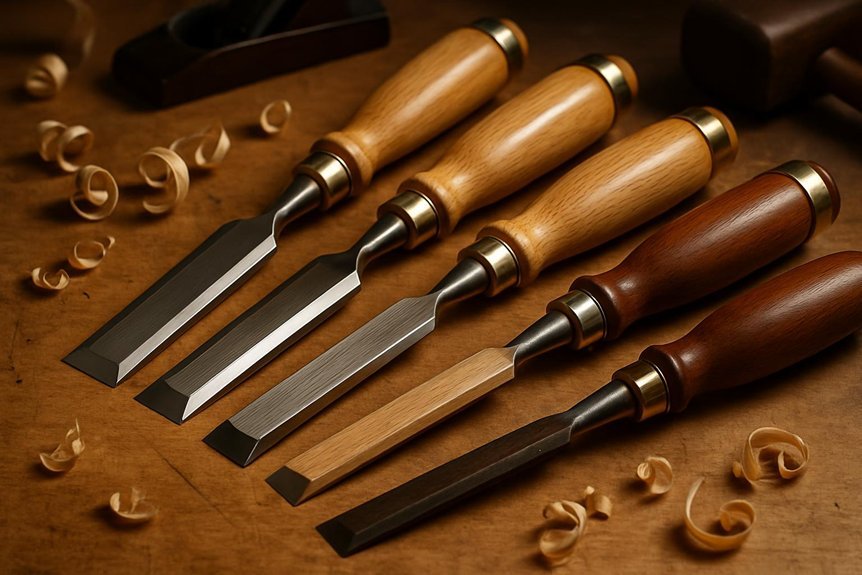
Welcome to our comprehensive guide on the best chisels for woodworking in 2025!
Whether you’re a beginner looking to dive into the world of craftsmanship or a seasoned woodworker aiming to enhance your toolkit, finding the right chisels can make all the difference in your projects. Quality chisels not only help you achieve precision in fine joinery but also tackle rough shaping with ease, making them essential for any woodworking endeavor.
In this roundup, we’ve carefully compared five top chisel sets that cater to a range of skill levels and project needs. From compact starter kits perfect for those just beginning their journey to professional-grade tools equipped with sharpening accessories, there’s something here for everyone.
We focused on key criteria such as edge retention, balance in hand, and the variety of blade sizes to ensure you can find the perfect fit for your workshop.
Our goal is to help you choose chisels that will save you time and frustration, allowing you to focus on what you love: creating beautiful wooden pieces.
So, dive in and discover which chisel set will elevate your woodworking experience! Scroll down to explore our expertly curated product picks.
Mt Diablo 4-Piece Wood Chisel Set with Ergonomic Handles and Canvas Tool Roll
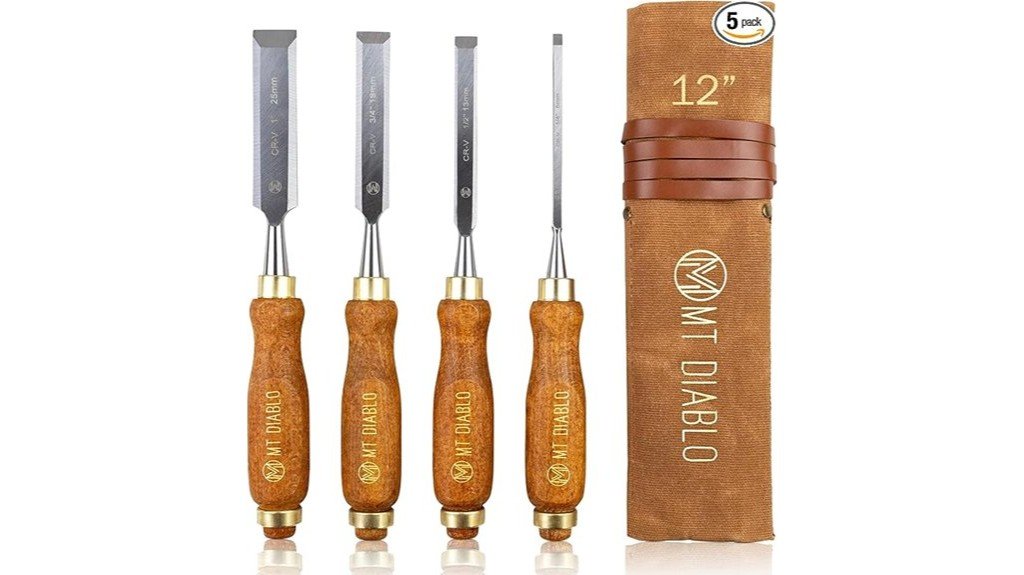
If you’re a DIY woodworker or hobbyist who values comfort during long sessions, the Mt Diablo 4-Piece Wood Chisel Set makes a strong candidate: its ergonomic wooden handles and professionally sharpened Cr-V 60 blades are designed to reduce hand fatigue while delivering clean, precise cuts across common widths (1/4″, 1/2″, 3/4″, and 1″). You’ll appreciate the drop-forged Chromium-Vanadium construction for durability and the included waxed canvas roll that keeps tools organized and portable. Reviews praise comfort and performance, though some note initial sharpening and long-term edge retention concerns. Overall, it’s versatile, well-crafted, and suited for most woodworking tasks.
Best For: DIY woodworkers and hobbyists who want a comfortable, durable chisel set for general woodworking tasks and easy transport.
Pros:
- Ergonomic wooden handles reduce hand fatigue for longer sessions.
- Drop-forged Cr-V 60 (Chromium-Vanadium) steel blades offer good durability and professionally sharpened edges for clean cuts.
- Includes four common widths (1/4″, 1/2″, 3/4″, 1″) plus a waxed canvas roll for organized storage and portability.
Cons:
- Some users report the initial sharpness could be better, requiring additional honing out of the box.
- Concerns about long-term edge retention compared to higher-grade steels.
- Wooden handles may be less impact-resistant than synthetic options for heavy mallet work.
ENERTWIST 13pcs Wood Chisel Set with Sharpening Stone, Honing Guide, Pencils, Sharpener in Hard Case
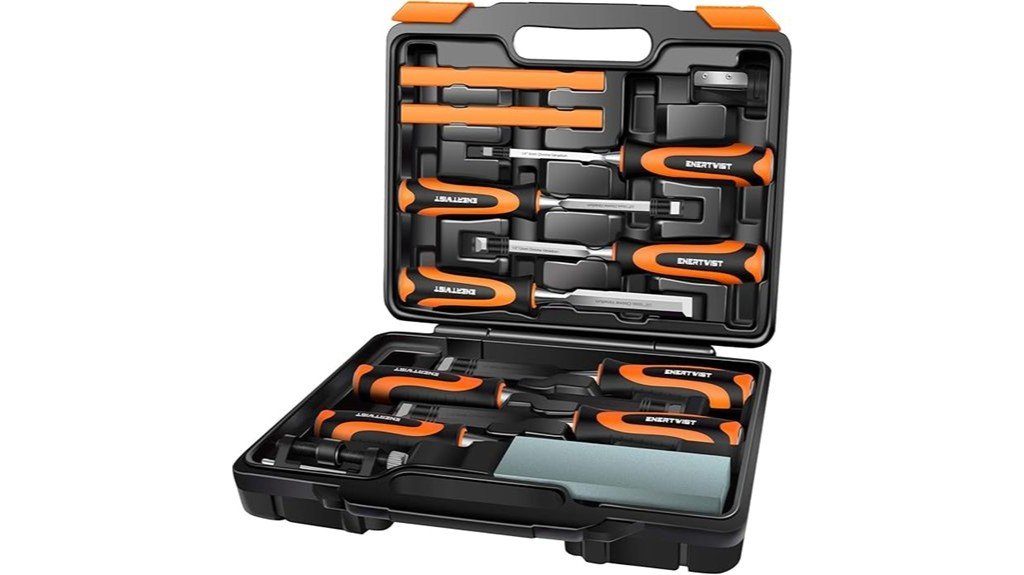
The ENERTWIST 13-piece chisel set is a particularly strong choice for beginners and hobbyist woodworkers who want a ready-to-use package that combines durable cutting tools with practical sharpening accessories. You get eight drop-forged CR-V chisels spanning 1/4″ to 1-1/2″, each with an ergonomic rubber handle and hardened steel strike cap, plus protective caps and a hard case. A sharpening stone and honing guide support 25° and 30° edges, while pencils and a user-friendly sharpener round out the kit. Reviewers praise its value and cutting performance; minor complaints note loose covers and a case that could be improved.
Best For: Ideal for beginner and hobbyist woodworkers seeking a ready-to-use chisel set with sharpening accessories for general carving, trimming, and joinery.
Pros:
- Durable drop-forged CR-V steel blades and ergonomic rubber handles with hardened strike caps for strong performance and comfort.
- Includes sharpening stone and honing guide (25° and 30°) plus pencils and sharpener — great for maintaining edges and learning sharpening.
- Good value package with protective caps and hard case; reviewers praise cutting performance and suitability for newcomers.
Cons:
- Some users report loose protective caps that may fall off during storage or transport.
- Hard case design could be improved for better organization and durability.
- Lacks some specialized accessories that more advanced woodworkers might want.
Amazon Basics 8-Piece Wood Carving Chisel Set with Sharpening Stone and Case
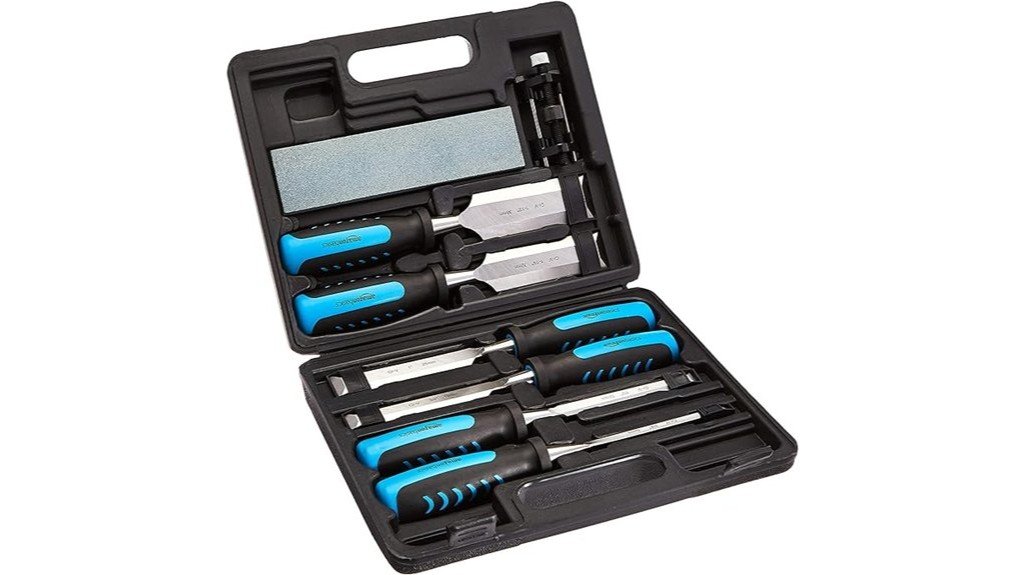
Woodworkers looking for an affordable, ready-to-use starter set will appreciate the Amazon Basics 8-Piece Wood Carving Chisel Set, which pairs six common chisel sizes (from 1/4″ to 1-1/2″) with a honing guide, a 120/240 grit sharpening stone, and a molded storage case so you can keep tools organized and travel-ready. You’ll get heat-treated chrome vanadium blades with narrow side bevels and contoured handles that reduce hand strain and boost control. Reviewers praise sharpness out of the box and the handy case, though some warn the backs need careful flattening and the included stone or guide may require upgrades.
Best For: Woodworkers seeking an affordable, ready-to-use starter chisel set with common sizes, basic sharpening tools, and a molded case for organization and portability.
Pros:
- Includes six common chisel sizes (1/4″ to 1-1/2″) plus a honing guide, 120/240 grit sharpening stone, and storage case for a complete starter kit.
- Heat-treated chrome vanadium blades and contoured handles provide good initial sharpness and comfortable control.
- Strong value with positive user feedback and high customer rating for amateurs and hobbyists.
Cons:
- Some users report the chisel backs are not perfectly flat, requiring additional flattening before optimal sharpening.
- Included honing guide and sharpening stone are basic; many users recommend upgrading sharpening equipment.
- May not maintain edge as well under heavy, professional use compared with higher-end chisels.
4 Piece Wood Chisel Set for Woodworking with Steel Hammer End and Ergonomic Handles (6mm,12mm,18mm,24mm)
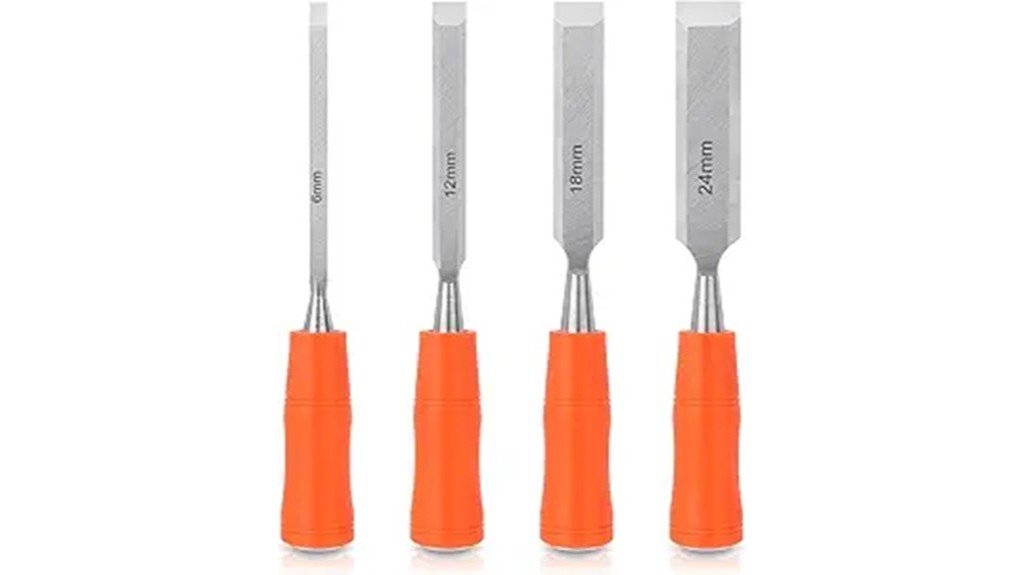
For hobbyists and tradespeople who want a reliable, all-purpose kit without breaking the bank, this 4-piece chisel set delivers precise control and durable performance. You get 6mm, 12mm, 18mm, and 24mm blades forged from carbon steel, sharp and resilient for softwood, hardwood, and laminated panels. Non-slip ergonomic handles reduce hand strain, and a steel hammer end lets you use a mallet or metal hammer without damaging the grip. Blades arrive lightly oiled to resist corrosion and include black plastic edge guards for protection. With strong reviews and solid value, it’s a dependable choice for DIY and pro work.
Best For: Hobbyists and tradespeople seeking an affordable, all-purpose chisel set for DIY woodworking, repairs, and light professional use.
Pros:
- Durable carbon steel blades that arrive sharp and hold an edge well for softwood, hardwood, and laminated panels.
- Ergonomic non-slip handles with a steel hammer end allow comfortable grip and safe mallet/hammer use.
- Includes protective edge guards and light oiling to prevent corrosion; strong customer reviews and good value.
Cons:
- Handle material is plastic (though reinforced), which may not feel as premium or long-lasting as hardwood or full-tang designs.
- May require additional sharpening sooner than high-end tool steels for heavy daily professional use.
- Limited to four sizes (6mm–24mm), so specialized widths or micro chisels aren’t included.
10-Piece Woodworking Chisel Set with Wooden Box and Sharpening Accessories
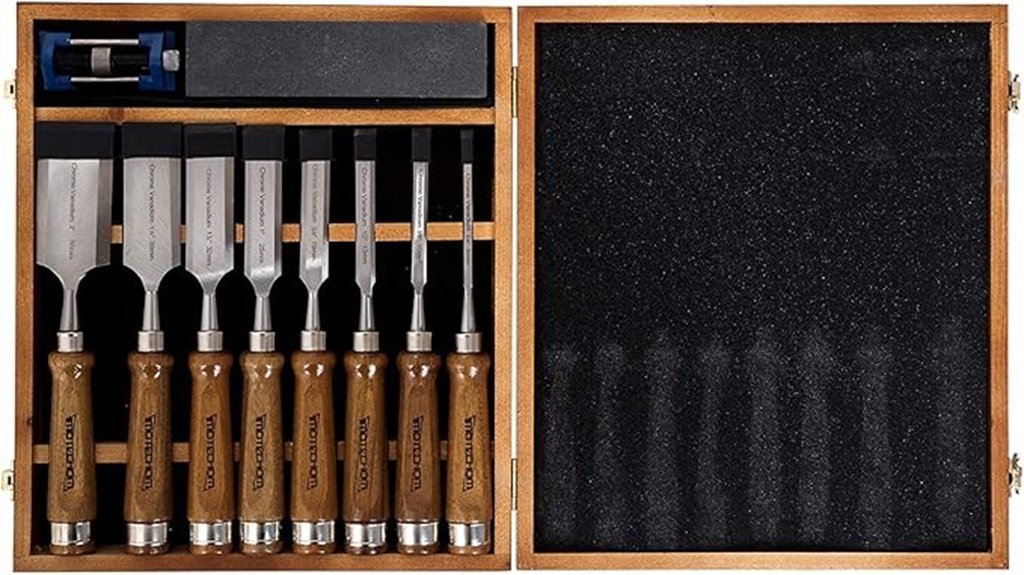
If you’re shopping on a budget but still want a complete starter kit, this 10-piece IMOTECHOM chisel set is worth a close look — it pairs a wide range of blade widths (from 6mm to 50mm) with a dedicated wooden storage box and basic sharpening accessories, so you’ll have the core tools and maintenance gear to begin tackling most common joinery and trimming tasks. You’ll get chrome-vanadium blades hardened to RC60, teak handles, a honing guide, and a 120/200 aluminum oxide stone. Reviews praise value and sharpness, though expect initial sharpening, possible rough edges, and a flimsy box for heavy use.
Best For: Budget-conscious beginner to intermediate woodworkers who want a complete starter chisel kit with multiple sizes and basic sharpening tools.
Pros:
- Wide range of blade widths (6mm–50mm) covering most common joinery and trimming tasks.
- Hardened chrome-vanadium blades (RC60) with pre-sharpened edges and comfortable teak handles.
- Includes honing guide and 120/200 aluminum oxide stone plus wooden storage box for organized transport.
Cons:
- Wooden storage box reported as flimsy and may not withstand rough handling.
- Some chisels may have rough edges and typically require significant initial sharpening.
- Honing guide stability and overall accessory quality are considered basic compared with higher-end sets.
Factors to Consider When Choosing Chisels for Woodworking
When you pick chisels, pay close attention to blade steel type and edge geometry angle because they determine cutting performance and how often you’ll need to sharpen. Consider handle material comfort and the strength of the tang and ferrule, since a comfortable grip and a secure ferrule reduce fatigue and prevent breakage under heavy use. Also make sure the set covers a useful chisel size range so you can handle both fine detail and larger removal tasks without reaching for improvised tools.
Blade Steel Type
Although the steel a chisel’s blade is made from might seem like a small detail, it has a major impact on durability, edge retention, and how often you’ll need to sharpen, so you should choose carefully based on the work you do. Blade steel type determines performance: Chromium-Vanadium (Cr‑V) alloy offers enhanced hardness and cutting effectiveness, while premium drop-forged steels are prized for maintaining sharpness and delivering clean finishes across many tasks. High-carbon steels often hold a keen edge longer but may need more frequent honing and careful rust prevention. Hardness, measured on the Rockwell C scale, correlates with longevity—blades around HRC60 perform exceptionally well. Also consider how easy the steel is to sharpen; that affects your maintenance time and tool reliability.
Edge Geometry Angle
You’ve already seen how blade steel affects durability and edge retention, and the angle grounded on that steel is what ultimately shapes how the tool performs at the workbench. Edge geometry angle dictates sharpness and cutting efficiency; typical grinds sit between 20° and 30° for general woodworking. You’ll choose about 20° for softer woods and fine paring, since a lower angle slices cleaner and reduces resistance. For hardwoods and heavy chopping, a steeper 25°–30° bevel gives greater durability and resists chipping. Remember acute edges cut beautifully but need more frequent sharpening, while obtuse edges sacrifice finesse for longevity. By matching angle to material and task, you’ll get better performance, longer service between hones, and greater satisfaction from each cut.
Handle Material Comfort
Because you’ll often spend long stretches at the bench, the handle material of a chisel plays a huge role in comfort, control, and fatigue management. You’ll notice wood handles feel warm and natural, giving a familiar grip that most woodworkers prefer for delicate work, while rubber or composite handles deliver superior grip and shock absorption for heavier chopping. Choose a contoured or shaped handle to fit your hand; it reduces finger and wrist strain and improves precision. Consider weight and balance—heavier handles can add stability, lighter ones reduce fatigue on long projects. Prioritize secure grip and tactile feedback to avoid slippage. Ultimately, match handle material and shape to your typical tasks and hand size for best comfort and control.
Tang and Ferrule Strength
After you pick a handle that feels good in your hand, the strength of the tang and ferrule becomes the next thing to check, since these components determine how well the chisel will stand up to forceful work and last over time. You want a tang that transfers force efficiently into the blade; full tang designs that run through the handle offer superior balance and control compared with partial tangs, so you’ll notice cleaner cuts and less wobble. Inspect the ferrule closely: a well-made steel or brass ferrule keeps the handle from splitting and locks the tang in place during heavy use. Choose chisels with high-grade tang and ferrule materials, and check them regularly for wear to maintain safety and performance.
Chisel Size Range
Pick chisel sizes with your project in mind, since the width of the blade directly affects control, speed, and the kinds of cuts you can make. Chisels come in a variety of widths, commonly measured in inches or millimeters, from about 1/4″ (6mm) up to 2″ (50mm). You’ll want a set that covers small to large tasks — typical kits include 1/4″, 1/2″, 3/4″, and 1″ — so you can move from delicate joinery to rough shaping without swapping tools constantly. Use smaller chisels for detailed carving and precision work, and larger ones for removing bulk material quickly. Match the chisel size to the scale of your piece: the right spread improves accuracy, reduces effort, and makes your workflow more efficient.
Sharpening and Maintenance
When you invest in chisels, keeping their edges sharp and well maintained will make the difference between clean, controlled cuts and frustrating tear-out, so regular sharpening should be part of your routine. You’ll want sharpening stones or honing guides—many sets include them—to maintain cutting effectiveness and consistent bevels. Aim for a repeatable angle, typically 25–30 degrees, to balance sharpness and durability. Some chisels arrive pre-sharpened, but you’ll often need to refine them to reach peak performance. High-quality steels like Chrome-Vanadium hold edges longer, though they may need specialized techniques or abrasives when they do require attention. Finally, use protective blade caps during transit or idle periods to prevent nicks; small precautions preserve hours of careful sharpening.
Storage and Protection
A few simple choices about how you store your chisels will pay off every time you reach for one: a good tool roll, a purpose-built wooden box, or a sturdy case keeps edges protected, prevents accidental nicks, and makes transport safer. Choose storage that fits your workflow; tool rolls are great for quick access, wooden boxes offer stable, organized bays, and hard cases are best for travel. Always use protective caps or guards on blades to avoid damage and injury. Keep tools dry and lightly oiled, especially high-carbon steel chisels, to guard against rust and corrosion. Label slots or arrange chisels by size so you won’t misplace them, which saves time. Invest in sturdy storage — it preserves performance and pays dividends over years.
FAQ
How Do I Maintain Chisels for Outdoor Use or Humid Climates?
FAQs on Maintaining Chisels for Outdoor Use or Humid Climates
1. How can I prevent rust on my chisels?
Keep chisels dry and wipe the blades after each use to remove moisture. Applying a thin coat of camellia oil or light machine oil can also help prevent rust.
2. What is the best way to store chisels in humid conditions?
Store chisels in a sealed roll or waterproof case with desiccant packs to absorb moisture and keep them dry.
3. How often should I sharpen my chisels?
Regular sharpening is essential, especially if you frequently use your chisels outdoors, as it helps maintain their effectiveness and reduces the risk of damage from rust.
4. Are there specific types of steel that are better for outdoor chisels?
Yes, consider using rust-resistant steels or stainless steel variants, as they are more resilient in outdoor and humid environments.
5. What should I do after using my chisels for wet jobs?
Disassemble the handles when possible to ensure they dry thoroughly, preventing moisture buildup that can lead to rust and damage.
6. How can I check for moisture damage on my chisels?
Periodically inspect the ferrules and glue joints for signs of moisture damage, such as rust or deterioration, to ensure your tools remain in good condition.
7. Is it necessary to oil chisels if I use them infrequently?
Yes, even if you use them infrequently, applying oil can help prevent rust and maintain the integrity of the blades.
8. What is the role of desiccant packs in storing chisels?
Desiccant packs absorb excess moisture in sealed storage, helping to keep chisels dry and preventing rust.
9. Can I use any oil for protecting chisels?
It’s best to use camellia oil or light machine oil, as these are specifically formulated to prevent rust without leaving a sticky residue.
10. What are the signs that my chisels need maintenance?
Look for signs of rust, dull blades, or any moisture accumulation around the ferrules and joints; these indicate that maintenance is due.
Can Chisels Be Resharpened With Common Household Tools?
1. Can I resharpen chisels at home?
Yes, chisels can be resharpened at home using common household tools.
2. What is the best tool for primary bevel work?
For primary bevel work, a flat oilstone or diamond plate is recommended.
3. How can I refine the edge after using an oilstone?
After using an oilstone, refine the edge on a leather strop with polishing compound.
4. What if I don’t have an oilstone or diamond plate?
If you don’t have those tools, coarse-to-fine sandpaper on a flat surface can effectively resharpen your chisels.
5. How important is maintaining consistent angles while sharpening?
Maintaining consistent angles is crucial for achieving a sharp edge and ensuring the longevity of your chisel.
6. What technique should I use while sharpening?
Use light, even strokes while sharpening to avoid damaging the chisel’s edge.
7. How do I remove burrs after sharpening?
Finish the sharpening process with honing to effectively remove any burrs left on the chisel.
8. Is safety a concern when resharpening chisels?
Yes, safety is important; always be cautious and use appropriate hand positioning to avoid accidents.
9. How long does the resharpening process take?
The time it takes to resharpen chisels varies depending on the tool condition, but patience is key for achieving the best results.
10. Can I use other household items for sharpening?
While oilstones and sandpaper are ideal, other household items may not be as effective; it’s best to stick with tools designed for sharpening when possible.
Which Chisels Are Best for Left-Handed Woodworkers?
FAQs on Chisels for Left-Handed Woodworkers
1. What should I look for in chisel handles as a left-handed woodworker?
Opt for chisels with comfortable, symmetric handles. This design allows for better grip and control without forcing a right-handed orientation.
2. Are there specific bevels I should consider for left-handed chisels?
Look for chisels with left-hand friendly bevels or fully symmetric bevels. These allow for more natural cutting angles when working on projects from the opposite side.
3. What handle length is ideal for left-handed woodworkers?
Shorter handles provide better control and maneuverability for left-handed users. This is especially important when working in tight spaces or from awkward angles.
4. Which types of steel are best for chisels?
High-quality carbon or A2 steel is recommended as they maintain a sharp edge effectively. This ensures precision and reduces the need for frequent sharpening.
5. How do ambidextrous wooden handles benefit left-handed woodworkers?
Wooden handles shaped for ambidexterity help minimize fatigue during extended use. This design allows for a more comfortable grip, improving accuracy and confidence in your work.
6. What is the importance of slim tangs in chisels?
Slim tangs enhance control and precision, making them particularly useful for left-handed woodworkers. They allow for a more delicate touch during detailed work.
7. Can I use regular chisels if they are not specifically left-handed?
While you can use regular chisels, they may not provide the same comfort and control. Choosing tools designed for left-handers can significantly improve your woodworking experience.
8. How can I ensure my chisels maintain their sharpness?
Regular maintenance, including honing and proper storage, is key to keeping chisels sharp. Using high-quality steel also contributes to edge retention.
9. Are there brands that specifically cater to left-handed woodworkers?
Yes, some brands design tools with left-handed users in mind, focusing on handle symmetry and bevel orientation. Research and reviews can help identify these brands.
10. What should I avoid when selecting chisels as a left-handed woodworker?
Avoid chisels with handles that are exclusively designed for right-handed use, as they can lead to discomfort and reduced precision. Additionally, steer clear of overly heavy chisels that may cause fatigue.
Are There Chisels Specifically for Working With Exotic Hardwoods?
1. What types of chisels are best for exotic hardwoods?
Chisels designed for exotic hardwoods typically feature tougher steels and micro-bevels, which enhance durability against dense grains.
2. Which steel types are recommended for chisels used on exotic woods?
High-edge-retention steels like A2 or O1 tool steel are ideal, especially those that are cryo-treated for improved performance.
3. What is the benefit of using skew or carving chisels?
Skew or carving chisels with acute bevels allow for cleaner cuts, making them particularly effective on the dense, abrasive grains of exotic hardwoods.
4. How important is the handle design for chisels used on tough woods?
Robust handles are essential for chisels working with exotic hardwoods, as they help withstand the additional force required when cutting through harder materials.
5. What should I use to strike the chisels?
A durable mallet is recommended to pair with chisels for exotic hardwoods, ensuring efficient power transfer without damaging the tool.
6. How often should I sharpen my chisels when working with hardwoods?
Frequent sharpening is crucial when using chisels on exotic hardwoods to maintain their cutting efficiency and prevent tearout.
7. What finishing tool can help after chiseling exotic hardwoods?
Using card scrapers after chiseling can help achieve a smooth finish and minimize any tearout that might occur with chiseling.
8. Why is edge retention important for chisels?
High edge retention is vital for chisels used on exotic hardwoods as it ensures that the blades remain sharp longer, reducing the need for constant sharpening.
9. Can I use standard chisels on exotic hardwoods?
While standard chisels can be used, they may not perform as well, leading to increased wear and tear, and potentially less clean cuts.
10. What challenges might I face when chiseling exotic hardwoods?
The dense and abrasive nature of exotic hardwoods can lead to increased tearout and quicker dulling of blades, making the right tools essential for successful woodworking.
Do Chisels Require Special Storage to Prevent Rust?
1. Do chisels need special storage?
Yes, chisels require special storage to prevent rust and maintain their sharp edges.
2. How should I clean my chisels before storing them?
You should wipe the blades clean and apply a light coat of oil to protect them from moisture.
3. Where is the best place to store chisels?
Chisels should be stored in a dry, low-humidity area. Options include a roll, wooden rack, or foam-lined drawer.
4. What can I use for long-term storage of chisels?
For long-term storage, consider using silica gel packs or a dehumidifier to absorb excess moisture.
5. How can I prevent chisels from getting nicked?
To avoid nicks, store chisels in a way that they do not come into direct contact with other tools.
6. How often should I inspect my chisels?
Regular inspection is recommended to ensure that your chisels remain sharp and rust-free.
7. What happens if chisels are stored improperly?
Improper storage can lead to rust formation and dull edges, diminishing the effectiveness of your chisels.
8. Can I store chisels in a toolbox?
While you can store chisels in a toolbox, ensure that it is dry and that the chisels are protected from direct contact with other tools.
9. Is oiling chisels necessary for storage?
Yes, lightly oiling chisels before storage is essential to create a protective barrier against moisture.
10. What is the ideal humidity level for storing chisels?
A low-humidity environment is ideal for storing chisels to minimize the risk of rust.
Final Thoughts
By choosing chisels that match your projects and budget, you’ll work more accurately and enjoy longer tool life. Pick sets with durable steel, comfortable grips, and available sharpening accessories, and prioritize blade widths that suit your joinery and carving tasks. Beginners benefit from all-inclusive kits, while experienced woodworkers may prefer premium single chisels for precision. With the right care and sharpening, any of these top picks will elevate your workmanship and make fine, repeatable cuts much easier.