
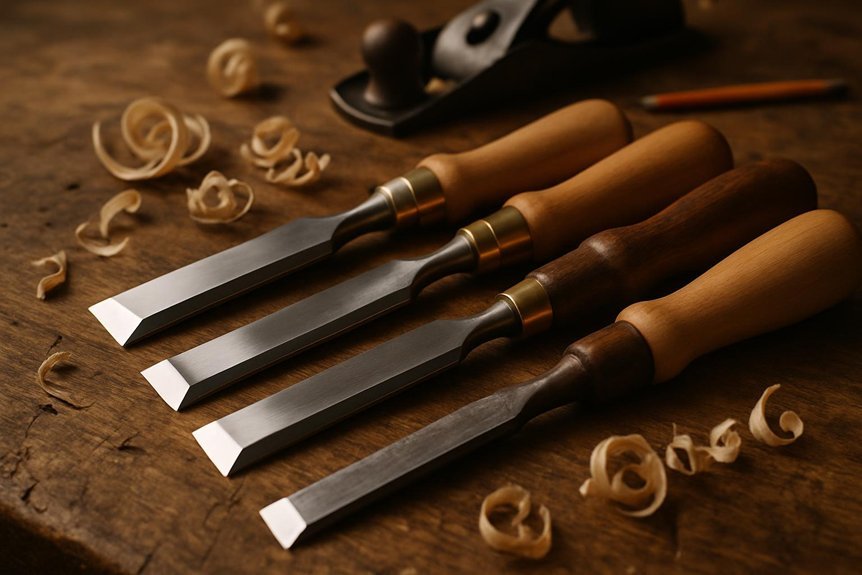
Are you diving into the world of DIY woodworking? If so, the right chisels can make all the difference in your projects. Selecting high-quality chisels not only saves you time but also enhances the precision of your cuts.
This guide is tailored for beginners seeking reliable tools that combine sharpness, durability, and comfort, ensuring a smoother woodworking experience.
When it comes to chisels, there are a few key features to consider. Look for ergonomic handles that provide a comfortable grip during extended use, as well as blades made from quality Cr-V steel for sharpness and longevity.
Additionally, having the right sharpening accessories will keep your tools in top shape, ready for any chopping, paring, or carving task you take on.
In this roundup, we’ve compiled the five best chisel sets perfect for budding woodworkers. Each set has been chosen for its ability to cater to various projects and skill levels, ensuring you find the right fit for your needs.
Ready to discover the perfect chisels to elevate your woodworking game? Scroll down to explore our top picks!
Mt Diablo 4 Piece Wood Chisel Set with Ergonomic Handles and Canvas Tool Roll
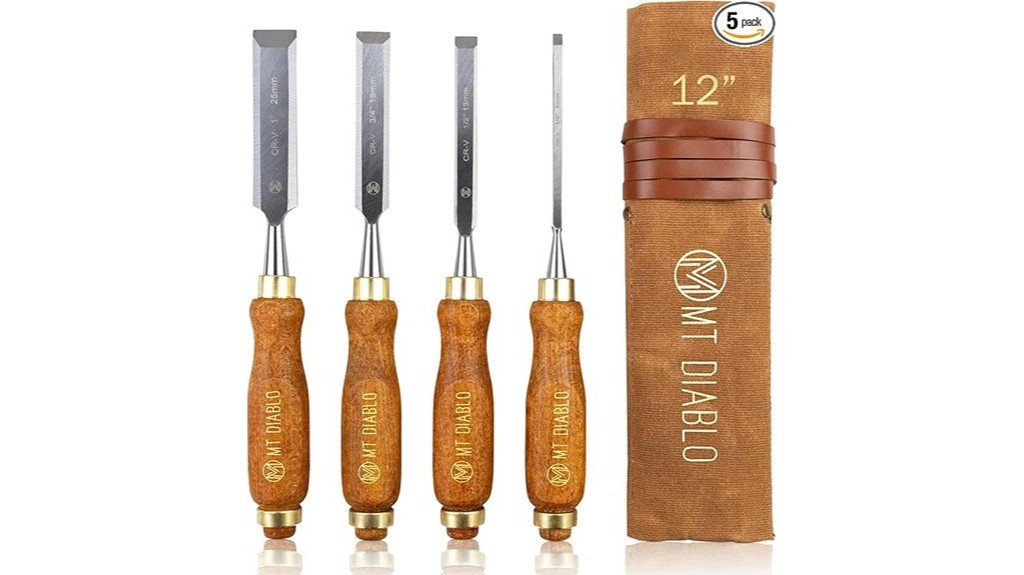
If you’re a DIY woodworker or hobbyist who values comfort during long sessions, the Mt Diablo 4 Piece Wood Chisel Set is a solid choice thanks to its ergonomic handles and professional sharpening—features that let you work precisely with less fatigue. You get four common widths (1/4, 1/2, 3/4, 1 inch) forged from Cr-V 60 steel for durability, and blades that arrive professionally sharpened for clean cuts. The wooden handles feel balanced and reduce strain, while the waxed canvas roll keeps tools organized and portable. Reviewers praise comfort and performance, though some note occasional sharpening or durability concerns.
Best For: DIY woodworkers and hobbyists who want comfortable, durable chisels for precision work and easy tool organization.
Pros:
- Professionally sharpened Cr‑V 60 blades for clean cuts out of the box.
- Ergonomic wooden handles reduce fatigue during extended use.
- Includes a waxed canvas roll for organized storage and portability.
Cons:
- Some users report the blades may need resharpening sooner than expected.
- Occasional concerns about long-term blade durability.
- Limited to four common widths — may not cover specialized chisel sizes.
10-Piece Woodworking Chisel Set with Wooden Box and Sharpening Accessories
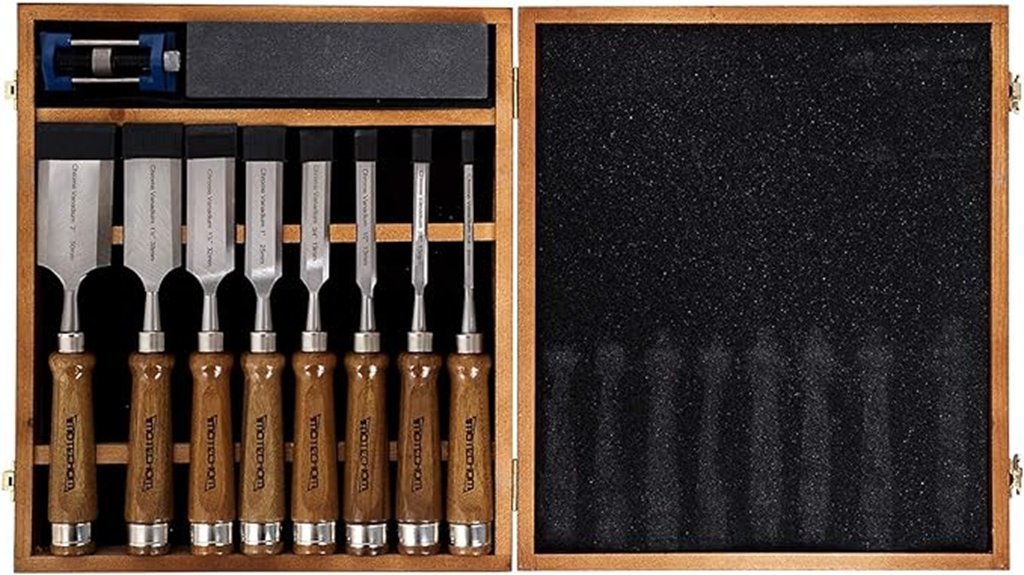
For hobbyists and budget-conscious woodworkers who want a ready-to-use kit, the IMOTECHOM 10-piece woodworking chisel set delivers a practical blend of variety and convenience, offering eight blade sizes from 1/4″ to 2″ plus a honing guide and an aluminum oxide sharpening stone so you can start shaping stock right away. You’ll get Chrome-Vanadium blades hardened to about Rockwell C60 and teak handles that feel solid in hand. The wooden box stores everything with EPE protection, though some users find the box flimsy. Expect to remove a protective coating and spend time refining the edges for best performance.
Best For: hobbyist and budget-conscious woodworkers who want a ready-to-use chisel kit with multiple sizes and basic sharpening accessories.
Pros:
- Good value with eight common chisel sizes (1/4″–2″) plus a honing guide and dual-grit sharpening stone.
- Durable Chrome–Vanadium blades hardened to ~HRC 60 and comfortable teak wood handles.
- Wooden storage box with EPE protection keeps components organized for transport and gifting.
Cons:
- Box and some components reported as flimsy; may not withstand rough handling.
- Chisels may arrive with a protective coating and require significant initial sharpening/refining.
- Honing guide stability and some rough edges noted by users, so performance may lag behind higher-end sets.
4 Piece Wood Chisel Set for Woodworking (6mm, 12mm, 18mm, 24mm)
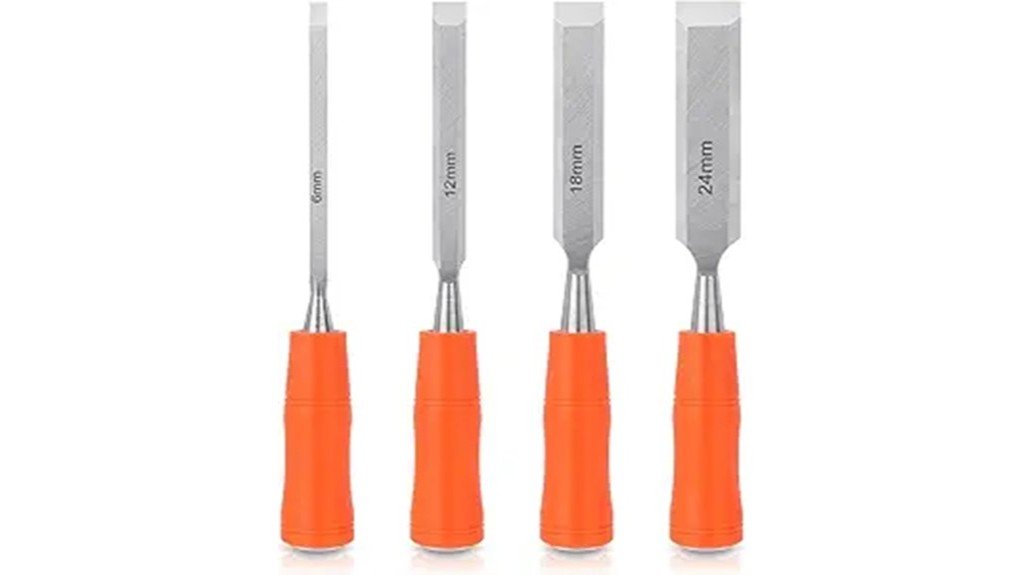
This 4-piece wood chisel set (6mm, 12mm, 18mm, 24mm) is an excellent choice when you need a compact, versatile kit that covers most common carving and paring tasks, whether you’re a hobbyist tackling small projects or a carpenter needing dependable trim work tools. You get carbon steel blades that stay sharp and resist wear on softwood, hardwood, and laminated surfaces, plus non-slip ergonomic handles that cut fatigue and improve control. Each handle features a steel hammer end for heavy strikes, blades arrive lightly oiled to prevent rust, and plastic guards protect edges. Reviews praise value, sharpness, and build quality.
Best For: Hobbyist woodworkers, carpenters, and DIYers needing a compact, versatile chisel set for carving, paring, and trim work on softwood, hardwood, and laminated materials.
Pros:
- Includes four common sizes (6mm, 12mm, 18mm, 24mm) covering most carving and paring tasks.
- Durable carbon steel blades with non-slip ergonomic handles and steel hammer ends for heavy strikes.
- Blades arrive lightly oiled and include plastic edge guards for corrosion and tip protection.
Cons:
- Carbon steel requires regular maintenance (sharpening and oiling) to prevent rust and maintain edge.
- Not a premium alloy tool; may wear faster under heavy professional use compared with high-end chisels.
- Plastic handles may be less durable long-term compared with traditional wooden or fully metal handles.
Amazon Basics 8-Piece Wood Carving Chisel Set with Honing Guide, Sharpening Stone and Case
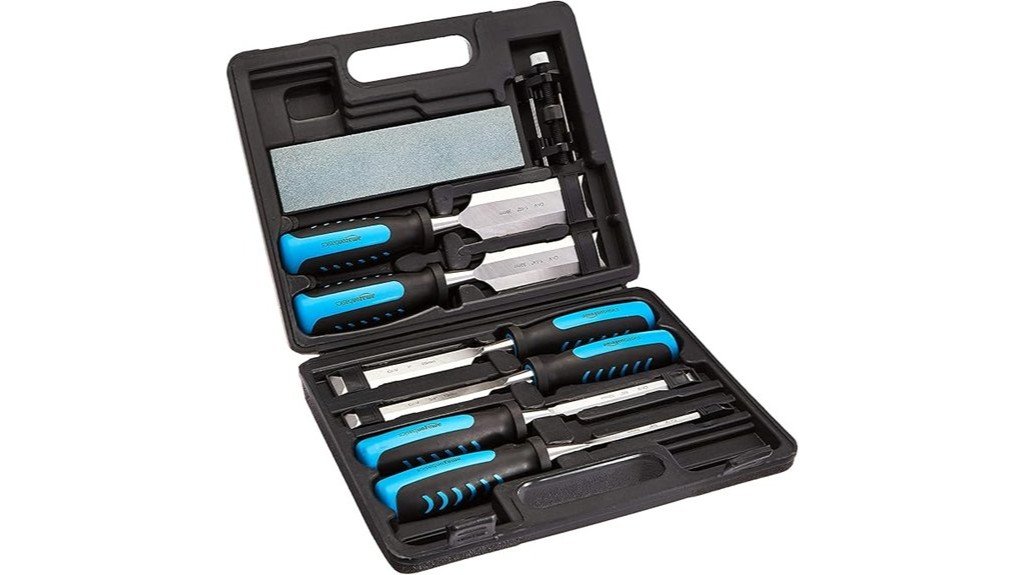
Woodworkers who want a complete starter kit without breaking the bank will appreciate the Amazon Basics 8-Piece Wood Carving Chisel Set, which pairs six commonly used chisel sizes (from 1/4″ to 1-1/2″) with a honing guide, a 120/240 grit sharpening stone, and a blow-molded case to keep everything organized; you’ll find the contoured handles comfortable for extended use and the heat-treated chrome vanadium blades offer solid edge retention for general carving and shaping tasks. You’ll get decent performance out of the set, with many users praising sharpness out of the box and ergonomic grips, though some note imperfect flatness on the backs and suggest upgrading sharpening tools for long-term maintenance.
Best For: Woodworkers and hobbyists seeking an affordable, complete starter chisel kit with useful sizes, basic sharpening tools, and a storage case.
Pros:
- Includes six commonly used chisel sizes (1/4″–1-1/2″), honing guide, sharpening stone (120/240 grit), and a blow-molded case for organized storage.
- Heat-treated chrome vanadium steel blades with contoured handles provide good edge retention and comfortable use right out of the box.
- Strong customer ratings and good value for beginners looking for a ready-to-use carving set.
Cons:
- Some users report imperfect flatness on the chisels’ backs, which can make precision sharpening more difficult.
- Included honing guide and sharpening stone are basic; many users recommend upgrading sharpening equipment for long-term maintenance.
- May not hold an edge through very heavy or professional-level continuous use compared with higher-end chisels.
ENERTWIST 13pcs Wood Chisel Set with Sharpening Stone, Honing Guide, Pencils, and Sharpener in Hard Case
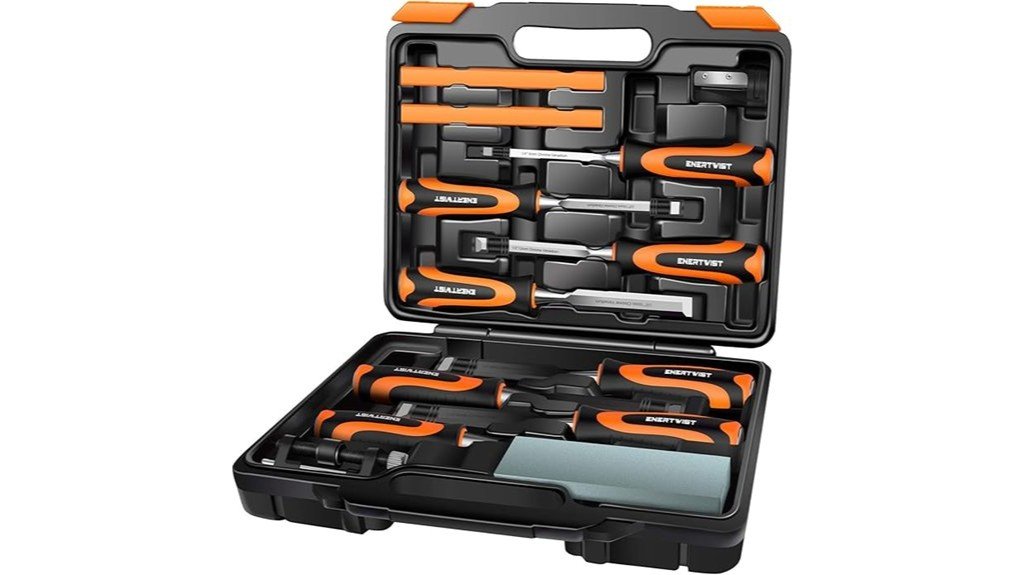
Hobbyists and beginners looking to build a solid toolkit will appreciate the ENERTWIST 13pcs Wood Chisel Set, which pairs an extensive range of drop-forged CR-V chisels with practical sharpening accessories so you can maintain edges without hunting for extra tools. You get eight chisels from 1/4″ to 1-1/2″, a sharpening stone, honing guide set for 25° and 30°, two carpenter pencils, a sharpener, protective caps, and a hard case that keeps everything organized. The ergonomic rubber handles with steel strike caps feel durable, blades hold an edge well, and overall value makes this ideal for new woodworkers.
Best For: Hobbyists and beginner woodworkers who want an all-in-one chisel set with sharpening tools to build a solid toolkit.
Pros:
- Includes a comprehensive range of eight drop-forged CR-V chisels (1/4″–1-1/2″) plus sharpening stone, honing guide, pencils, sharpener, protective caps, and hard case.
- Ergonomic rubber handles with hardened steel strike caps offer comfort and durability for hand and mallet work.
- Good value and edge retention for the price, making it ideal for learning and everyday shop tasks.
Cons:
- Some users report loose protective caps that may not stay secure during transport.
- Case design could be improved for better organization and protection of blades.
- Lacks specialized or higher-end accessories that more experienced woodworkers might prefer.
Factors to Consider When Choosing Chisels for DIY Woodworking
When choosing chisels for your DIY woodworking projects, you’ll want to check the blade steel type for edge retention and toughness, since that determines how often you’ll need to sharpen. Consider handle comfort and grip alongside the range of chisel sizes included, because a comfortable tool and the right sizes make cutting and paring much more efficient. Finally, inspect edge sharpness quality and think about maintenance and sharpening requirements so you can keep the tools performing well over time.
Blade Steel Type
Because the steel used for a chisel’s blade dictates how it performs and how much care it needs, choosing the right blade steel is one of the most important decisions you’ll make as a DIY woodworker. Steel type controls edge retention, durability, and maintenance: chromium-vanadium (Cr-V) is a common choice because it balances hardness and wear resistance, so it stays sharp longer without extreme fuss. High carbon steel can give you excellent sharpness and edge holding, but expect more frequent sharpening and careful storage to prevent rust. Stainless steel resists corrosion in humid shops, though it often sacrifices some edge life compared with Cr-V or high carbon. Also consider Rockwell hardness ratings and manufacturing methods like heat treatment or drop-forging, since they affect brittleness and overall blade longevity.
Handle Comfort and Grip
Even if you’re working on a small weekend project, the comfort and grip of a chisel’s handle will shape how long you can work effectively and how precise your cuts turn out. You’ll want ergonomic handles that reduce hand strain, letting you work longer without losing accuracy; they’re especially useful when you’re learning control. Choose materials like wood or rubber for a tactile, secure feel that aids precise movements, and look for non-slip designs so the tool won’t shift during heavy carving or sudden impacts. Consider weight and balance: lighter handles reduce fatigue on long sessions, while heavier ones can give steadier control for detailed cuts. A comfortable grip improves overall performance and safety, helping you finish cleaner, more consistent work.
Chisel Sizes Included
Handle comfort matters, but the sizes of chisels you include in your kit will determine how many different tasks you can tackle effectively. Choose a range from small to large — typically 1/4 inch up to 2 inches — so you can work on both delicate carving and heavier material removal. A standard set including 1/4, 1/2, 3/4, and 1 inch covers most beginner projects, giving versatility without excess cost. Consider sets that add specialty widths like 1-1/4 and 1-1/2 inches if you plan more intricate or varied work. Having multiple sizes on hand improves precision and speeds progress, since you’ll match blade width to cut type. Ultimately, size variety enhances adaptability and leads to better project outcomes.
Edge Sharpness Quality
When you want clean, controlled cuts and smooth finishes, edge sharpness becomes one of the most important factors to evaluate when choosing chisels for DIY woodworking; a keen edge cuts with less force, reduces tear-out, and lets you work more accurately. You’ll notice chisels made from higher-quality steels, like Chrome-Vanadium, hold an edge longer and resist dulling during prolonged use, which translates to more consistent results and less frequent attention. Pre-sharpened, machine-ground blades offer immediate usability out of the box, though you may refine them for peak performance. Look for blades hardened toward higher Rockwell ratings (around C60) if you want superior edge retention and durability. Prioritizing sharpness quality up front saves time and improves the finish of your projects.
Maintenance and Sharpening
Because chisels are precision tools that rely on a keen edge and corrosion-free surfaces, regular maintenance and proper sharpening are essentials you shouldn’t skip; cleaning and oiling the blades after use prevents rust and keeps them moving smoothly, while storing them with protective caps or edge guards avoids accidental dulling or injury. You’ll sharpen most chisels before use, and using a honing guide helps you hold the correct bevel angle consistently for better cuts. Blade steel hardness, such as Chrome-Vanadium, determines how long an edge holds and how often you’ll need to sharpen. A reliable two-step sharpening routine — coarse stone to re-establish geometry, followed by fine stone for a razor finish — gives predictable, repeatable results and improves your woodworking outcomes.
Storage and Protection
Although you may be enthusiastic to buy a tempting array of steel, choosing the right storage and protection for your chisels is as important as selecting the tools themselves, since good storage preserves edge geometry, prevents corrosion, and keeps your workshop safe. Store chisels in wooden boxes or hard cases to shield blades from knocks and maintain sharpness during transport. Use blade caps or guards—many sets include them—to protect cutting edges and reduce injury risk when tools aren’t in use. Pick a case that organizes chisels by size and type so you can grab the right one quickly. If your set includes sharpening stones or honing guides, keep them stored together to save time. Finally, keep chisels dry and lightly oiled to prevent rust and extend their life.
FAQ
Can Chisels Be Used Safely Without Gloves?
FAQs on Using Chisels Safely Without Gloves
1. Is it safe to use chisels without gloves?
Yes, using chisels without gloves can be safe if you take necessary precautions.
2. What precautions should I take when using a chisel?
Keep the chisel blades sharp, secure your workpieces with clamps, and maintain a firm grip to avoid slips.
3. How can I prevent slips while chiseling?
Use push blocks or mallets instead of your bare hands near the cutting edge and always cut away from your body.
4. Do I need eye protection while chiseling?
Yes, always wear eye protection to shield your eyes from potential flying debris.
5. Why shouldn’t I wear gloves when using a chisel?
Gloves can reduce dexterity and control, which might increase the risk of accidents while using a chisel.
6. When should I consider wearing gloves while chiseling?
Consider gloves only when the protection they provide outweighs the potential loss of control over the tool.
7. What should I do to keep my hands safe while chiseling?
Keep your hands dry and clean to maintain a good grip on the chisel and prevent slips.
8. Are there specific types of chisels that are safer to use without gloves?
Generally, any chisel can be used safely without gloves if proper techniques and safety measures are followed.
9. What is the best way to hold a chisel?
Maintain a steady grip and ensure your hands are positioned away from the cutting edge to enhance safety.
10. What techniques can enhance my safety while chiseling?
Consistently use proper techniques such as securing your workpiece, cutting away from your body, and utilizing tools like mallets for better control.
How Do I Store Chisels to Prevent Rust Long-Term?
1. How should I store chisels to prevent rust?
Store chisels in a dry and temperature-stable environment. This helps minimize moisture exposure, which is crucial for rust prevention.
2. What should I apply to the blades before storing?
Coat the blades lightly with oil or a rust inhibitor before shelving to create a protective barrier against moisture.
3. What type of storage options are best for chisels?
Use a wooden rack, magnetic strip, or individual sleeves to keep chisels separated and protect their edges from damage.
4. Are there specific storage solutions for transporting chisels?
Leather rolls are effective for transporting chisels safely while keeping them protected and organized.
5. How can I control moisture in my storage area?
Keep silica gel packets or a dehumidifier nearby to absorb excess moisture and maintain a dry environment for your tools.
6. How often should I check my chisels for rust?
Periodically inspect the blades for any signs of rust or corrosion to ensure they remain in good condition.
7. What should I do if I find rust on my chisels?
If you find rust, reapply oil and use a sharpening stone to restore the blade’s edge and remove any corrosion.
8. How can I label my chisel storage?
Use labels to identify each tool’s purpose or size, which helps in handling them carefully and maintaining their condition.
9. Is it necessary to regularly reapply oil to my chisels?
Yes, regularly reapplying oil helps maintain a protective layer against moisture and ensures the blades stay sharp and rust-free.
10. Can I store chisels in a toolbox?
Storing chisels in a toolbox is acceptable, but ensure they are well-protected and separated to avoid contact and edge damage.
Can Beginners Resell or Trade Quality Chisels Later?
FAQs on Reselling or Trading Quality Chisels
1. Can I resell quality chisels later?
Yes, you can typically resell quality chisels, and they often retain their value if maintained properly.
2. What factors influence the resale value of chisels?
The resale value is influenced by brand, condition, and rarity. Keeping chisels sharp and rust-free is essential for maintaining their worth.
3. How can I document the provenance of my chisels?
Documenting provenance involves keeping records of purchase receipts, previous ownership, and any unique characteristics of the chisels.
4. What should I do to prepare my chisels for resale?
Take clear, detailed photos and ensure the chisels are in good condition, free of rust, and properly sharpened.
5. Where can I sell or trade my chisels?
You can use local classifieds, specialty forums, or tool auction sites to reach potential buyers or collectors.
6. What is the expected depreciation on chisels?
Expect modest depreciation unless your chisels are high-end or vintage; their value can vary based on demand and market conditions.
7. Can I trade chisels for other tools?
Yes, trading chisels is a viable option to acquire different tools or store credit at various outlets.
8. Are vintage chisels worth more than new ones?
Often, vintage chisels can be worth more than new ones due to their rarity and historical significance.
9. Should I clean my chisels before selling them?
Yes, cleaning your chisels before selling them can enhance their appearance and potentially increase their resale value.
10. Do I need to provide warranties when selling chisels?
While not required, offering a brief warranty or guarantee can make your chisels more appealing to buyers.
Are There Eco-Friendly or Sustainably Sourced Chisel Options?
1. What materials should I look for in eco-friendly chisels?
Seek chisels made with sustainably sourced hardwood handles, certified reclaimed wood, or those from FSC-certified suppliers. The blades should ideally be made from recycled or responsibly produced steel.
2. What certifications indicate a chisel is eco-friendly?
Look for certifications such as FSC (Forest Stewardship Council) or other sustainability certifications that ensure responsible sourcing of materials. These certifications help ensure that the products have been sourced in an environmentally friendly manner.
3. Are there companies that focus on eco-friendly tools?
Yes, many companies specialize in eco-friendly tools, offering products made from sustainable materials and with ethical manufacturing practices. Researching suppliers that prioritize transparency in their supply chains can help you find these options.
4. How can I determine if a chisel’s materials are sustainably sourced?
Check for certifications from recognized organizations and inquire directly with sellers about the origins of their materials. Vendors that provide clear information about their supply chains are often more reliable.
5. What packaging should I expect from eco-friendly chisels?
Eco-friendly chisels often come in minimal, recyclable packaging to reduce waste. Look for brands that emphasize sustainability not just in their products but also in how they package them.
6. Can I get my eco-friendly chisels repaired or sharpened?
Many manufacturers of eco-friendly chisels offer lifetime sharpening or repair services. This not only extends the life of your tools but also reduces waste by minimizing the need for new purchases.
7. Why is it important to support eco-friendly chisel manufacturers?
Supporting eco-friendly manufacturers helps promote sustainable practices in the tool industry, reducing the environmental impact of production. It also encourages more companies to prioritize sustainability in their operations.
8. Are there specific brands known for eco-friendly chisels?
While specific brands may vary by region, look for those that advertise their commitment to sustainability and use eco-friendly materials. Researching user reviews can also help identify reputable brands.
9. How do recycled materials contribute to eco-friendly chisels?
Using recycled materials reduces the need for new resources and minimizes waste. It also lessens the environmental impact associated with the extraction and processing of raw materials.
10. Is the durability of eco-friendly chisels comparable to traditional options?
Yes, many eco-friendly chisels are designed to be just as durable as traditional options, especially when made from high-quality materials. Proper care and maintenance, such as regular sharpening, can further enhance their longevity.
Do Chisels Require Different Techniques for Hardwoods Vs Softwoods?
1. Do chiseling techniques differ between hardwoods and softwoods?
Yes, the techniques vary significantly. Hardwoods require slower, more controlled cuts, while softwoods can handle more aggressive paring.
2. What type of edge is best for chiseling hardwoods?
For hardwoods, sharper edges are essential to prevent chipping during cuts. Frequent honing is also necessary to maintain this sharpness.
3. Can I use dull tools on softwoods?
Yes, softwoods can tolerate slightly duller tools compared to hardwoods. They are more forgiving and can withstand the impact of less sharp edges.
4. What grip adjustments are needed for different wood types?
When chiseling hardwoods, you may need a firmer grip due to the controlled force required. Softwoods allow for a more relaxed grip since the cuts can be more aggressive.
5. Should I adjust the angle of the chisel when switching woods?
Absolutely. Lower bevel angles are better for slicing through hardwood fibers, while higher angles work effectively on softwoods.
6. Is it important to test cuts on scrap wood?
Yes, always test on scraps to ensure your technique and tools are suitable for the specific wood type before working on your main piece.
7. How should I secure the wood piece while chiseling?
Ensure the piece is firmly secured in place, whether in a vise or with clamps, to prevent slipping during chiseling, which can lead to inaccurate cuts.
8. What should I focus on to achieve clean results?
Maintaining sharpness, adjusting your grip and angle appropriately, and applying the right amount of force will help achieve clean, predictable results.
9. Does the chiseling technique affect the finish of the wood?
Yes, using the correct technique for the wood type can significantly impact the finish. Controlled cuts on hardwoods produce smoother surfaces compared to aggressive cuts on softwoods.
10. What tools are better suited for hardwood chiseling?
Tools that are sharp and well-honed are essential for hardwood chiseling. Investing in high-quality chisels can make a noticeable difference in the ease of work and final results.
11. Are there specific chisels recommended for softwoods?
While standard chisels can be used, those designed for softer woods may have slightly different angles and edge profiles to optimize performance.
Final Thoughts
You’ve seen useful chisel options that balance comfort, edge retention, and value, so pick a set that matches your projects and budget. Prioritize quality steel and ergonomic handles for safer, more accurate cuts, and keep a honing guide and stone on hand to maintain edges. Start with a few common sizes, store tools properly, and practice sharpening—those habits will boost your skill and let you tackle increasingly precise, satisfying woodworking projects confidently.