
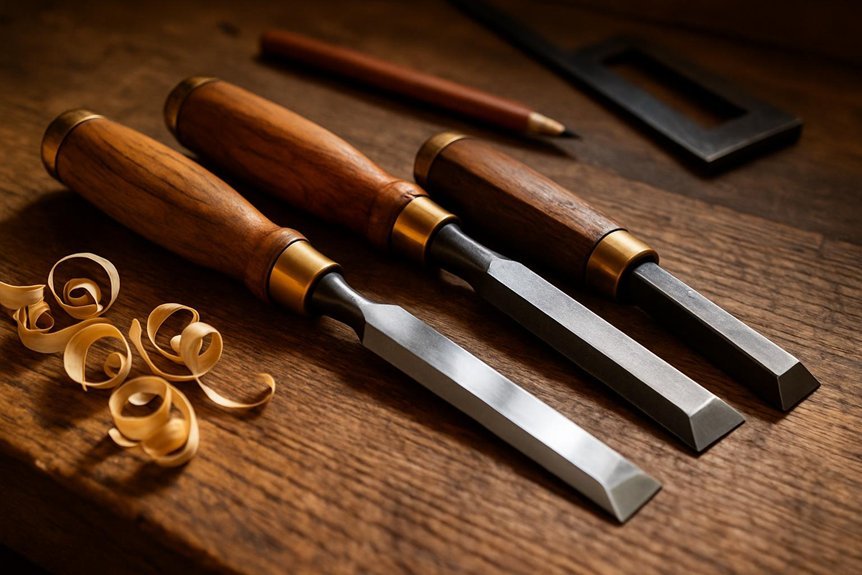
If you’re a beginner woodworker ready to dive into your first projects, selecting the right chisels is crucial for your success. The right tools not only enhance your skills but also improve the quality of your work.
You’ll want chisels that maintain their sharpness, fit comfortably in your hand, and offer a range of cutting widths to tackle various tasks.
In this roundup, we’ve identified three top chisel sets that can help you build a solid foundation in woodworking. The ENERTWIST 13-piece set stands out for its variety, complete with a sharpening stone and guide to keep your tools in top shape.
If you’re looking for a balance of sharpness and affordability, the 4-piece ergonomic set is an excellent choice. For those seeking durable, professional-grade construction, the Mt Diablo kit won’t disappoint.
Each of these sets is designed to meet the unique needs of beginner woodworkers, offering reliability and performance as you embark on your creative journey.
Ready to find the perfect chisels for your woodworking projects? Scroll down to explore our top picks!
ENERTWIST 13pcs Wood Chisel Set with Sharpening Stone, Honing Guide, Pencils & Case
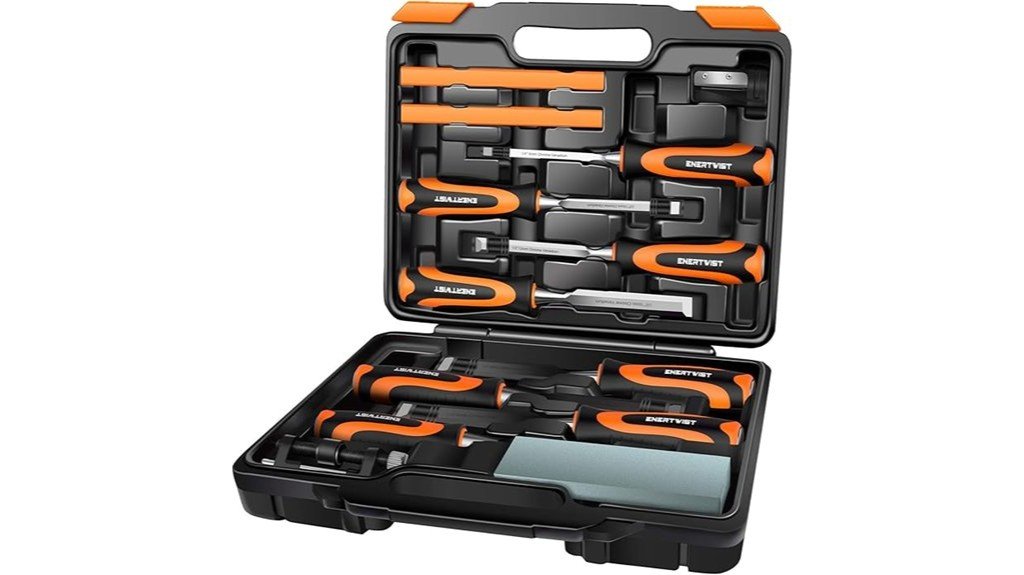
If you’re starting out in woodworking and want a single, complete kit to learn with, the ENERTWIST 13‑piece set stands out for its combination of range and sharpening gear: eight drop‑forged CR‑V chisels in sizes from 1/4″ to 1‑1/2″ cover most common cuts, while the included sharpening stone and honing guide teach you how to maintain a razor edge at both 25° and 30°; the ergonomic rubber handles with hardened strike caps and protective blade caps make the tools safer and more comfortable for repeated use, so you can focus on practicing technique rather than hunting for replacement parts. You get pencils, a sharpener and a hard case that keep everything organized, and the chisels perform well across soft and hardwoods. Reviews praise value and edge retention, though some report loose covers and a case that could be sturdier. With a 30‑day return option and solid materials, this set suits beginners who want a reliable, educational starter kit.
Best For: Beginners and hobbyist woodworkers who want a complete, affordable starter kit with a range of chisel sizes and included sharpening tools.
Pros:
- Drop-forged CR-V steel blades and included honing guide/sharpening stone help maintain sharp, durable edges.
- Ergonomic rubber handles with hardened strike caps and protective blade caps increase comfort and safety during use.
- Comprehensive set (eight chisels 1/4″–1-1/2″, pencils, sharpener, hard case) offers strong value for learning and practice.
Cons:
- Some users report loose protective covers that may not secure blades reliably.
- Hard case quality could be sturdier for better long-term storage and transport.
- Lacks some specialized accessories that more advanced woodworkers might want.
4 Piece Wood Chisel Set for Woodworking with Steel Hammer End and Ergonomic Plastic Handles (6mm, 12mm, 18mm, 24mm)
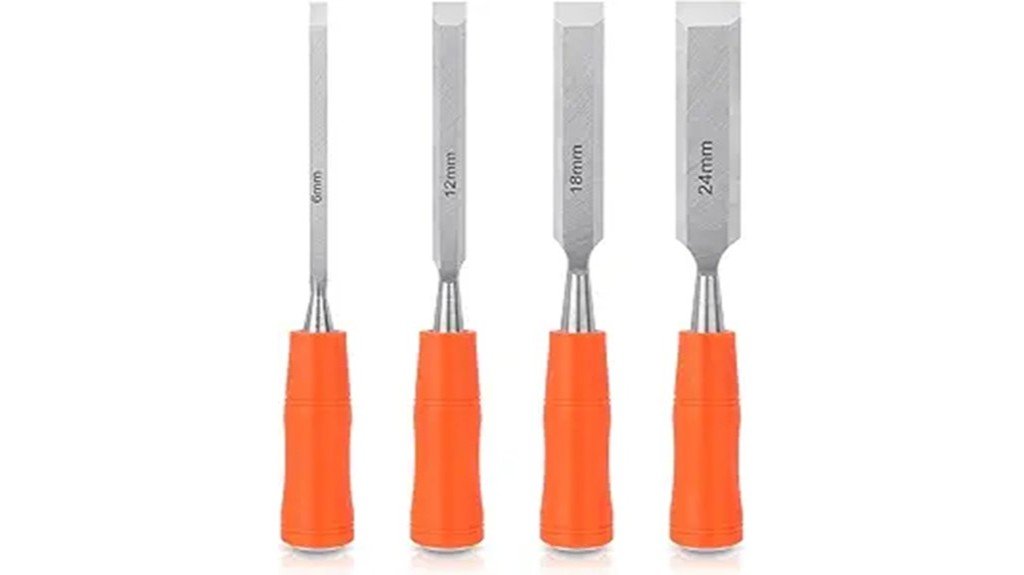
For beginner woodworkers looking for a reliable, budget-friendly starter set, this 4-piece chisel kit — featuring 6mm, 12mm, 18mm, and 24mm sizes — gives you the most frequently used cutting widths for common joinery and trim work. You’ll get carbon steel bevel blades that arrive slightly oiled to resist corrosion, and they hold an edge well across softwoods, hardwoods, and laminated boards. Non-slip ergonomic plastic handles reduce hand strain and offer solid control, while the reinforced steel hammer ends withstand mallet or hammer blows. Each chisel includes a plastic edge guard; reviewers praise sharpness, build quality, and value.
Best For: beginner to intermediate woodworkers and DIYers seeking an affordable, versatile starter chisel set for common joinery, trim work, and general woodworking tasks.
Pros:
- Carbon steel bevel blades arrive slightly oiled, hold an edge well, and work on softwood, hardwood, and laminated boards.
- Ergonomic, non-slip plastic handles with steel hammer ends provide comfort and durability for mallet or hammer strikes.
- Includes plastic edge guards and receives strong customer praise for sharpness, build quality, and value.
Cons:
- Carbon steel requires occasional maintenance (cleaning and oiling) to prevent rust over time.
- May need initial sharpening/refinement for users who prefer a razor finish out of the box.
- Plastic handles, while ergonomic, are less premium-feeling than traditional wooden or laminated grip options.
Mt Diablo 4 Piece Wood Chisel Set with Ergonomic Handles and Canvas Tool Roll
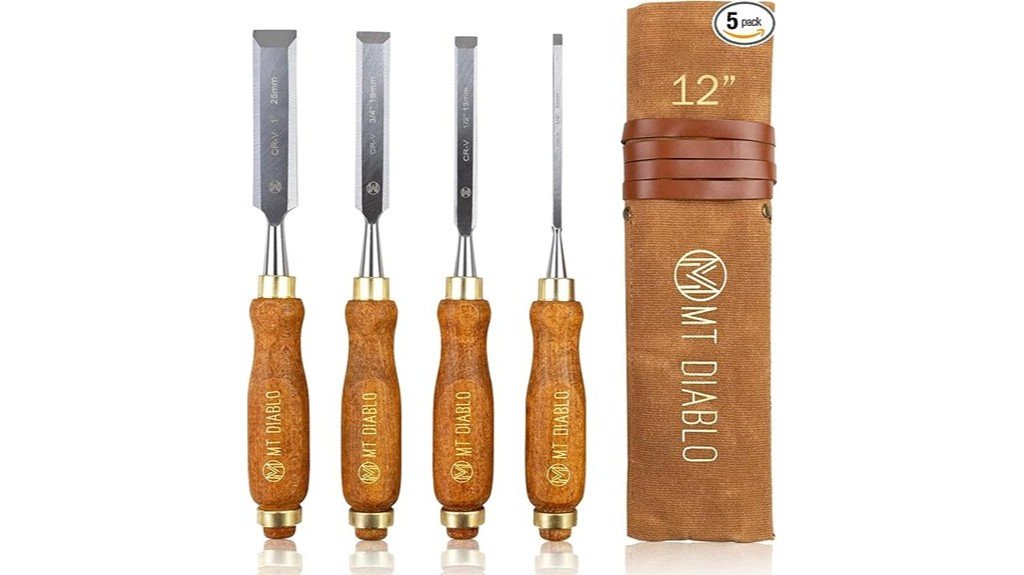
Woodworkers just starting out will appreciate that the Mt Diablo 4 Piece Chisel Set pairs professional-grade Cr‑V60 steel with ergonomically shaped wood handles, giving you durable blades and comfortable control as you learn knife‑edge techniques. You get four common widths (1/4, 1/2, 3/4, 1 inch), each drop-forged and professionally sharpened to deliver clean cuts and reliable performance. The waxed canvas tool roll keeps tools organized and portable, useful for classes or jobsite work. Reviews praise comfort and design, though some users note initial sharpening and long-term edge questions. Overall, it’s a solid, versatile starter set.
Best For: Woodworkers and DIY beginners wanting a versatile, comfortable starter chisel set with professional-grade Cr‑V60 blades and a portable canvas roll.
Pros:
- Durable drop-forged Cr‑V60 steel blades, professionally sharpened for clean cuts.
- Ergonomic wooden handles reduce fatigue for longer use.
- Includes four common widths and a waxed canvas roll for organized transport.
Cons:
- Some users report the initial edge may need resharpening out of the box.
- Long-term blade durability and edge retention have occasional negative feedback.
- Limited to four sizes—may require additional chisels for specialized tasks.
Factors to Consider When Choosing Chisels for Beginner Woodworkers
When you’re choosing chisels as a beginner, pay attention to blade material and hardness since that determines edge retention and how often you’ll need to sharpen. Also consider the sizes included and whether the handles feel comfortable and secure in your hand, because a good grip and the right range of blade widths make learning safer and more effective. Finally, think about sharpening and maintenance requirements plus any safety or storage accessories, so your tools stay sharp, protected, and ready for the next project.
Blade Material and Hardness
Blade material and hardness play a central role in how a chisel performs and how long it will stay sharp, so you’ll want to choose carefully based on the jobs you plan to tackle. The blade material affects durability and cutting ability: CR-V (chromium-vanadium) steel offers enhanced hardness and keeps an edge longer, making it great for carving and shaping. Carbon steel also sharpens well and holds a keen edge, suitable for both softwoods and hardwoods. Drop-forged construction adds toughness, helping the blade resist chipping or bending under heavier use. For beginners, professionally sharpened edges save time and deliver cleaner finishes, so look for tools that combine quality steel, solid forging, and a ready-to-use bevel to get reliable performance from the start.
Chisel Sizes Included
Picking the right range of chisel sizes can make your first projects much smoother, so look for a set that covers everything from fine detail work to heavier material removal. You’ll want a variety typically spanning about 1/4 inch to 1-1/2 inch, which handles carving, shaping, and general joinery. Aim for sets that include at least four to eight sizes so you’re prepared for both basic tasks and more advanced techniques without buying extras immediately. Include very narrow widths, like 6mm (1/4 inch), for precision and tighter corners, plus medium and larger widths, such as 24mm (1 inch) and above, for removing bulk material quickly. A well-balanced size selection increases versatility and efficiency.
Handle Comfort and Grip
Comfortable handles make a big difference in how long and how well you can work, so look for grips that reduce strain and give you confident control. Choose chisels with ergonomic handles to minimize hand fatigue during longer projects; thoughtful shaping supports your palm and fingers, so you maintain steady pressure without discomfort. Non-slip surfaces are equally important, since better traction improves precision and reduces the chance of slips when carving or paring. Durable attachment between handle and blade keeps the tool reliable over time, preventing loosening or detachment under impact. Materials like quality rubber or molded plastic absorb shock and feel comfortable during hammering, and adjustable sizing or generous grip profiles accommodate different hand sizes for consistent control.
Sharpening and Maintenance
Good upkeep makes the difference between a frustrating tool and one you’ll rely on for years, so you should treat sharpening and maintenance as core skills from the start. Regular sharpening is essential: sets often include stones and honing guides that help you hold consistent bevels, commonly at 25° or 30°, which preserves cutting performance. Using a honing guide is especially helpful for beginners because it maintains angle accuracy and speeds learning. After each session, wipe blades clean and apply a light oil to prevent rust and corrosion, which dull edges over time. Keep protective caps or edge guards on when not in use to avoid nicking the blade. Learn and follow a simple maintenance routine; it will extend tool life and keep your chisels reliable.
Safety and Storage Accessories
After you get into the habit of sharpening and maintaining your chisels, think about how you store and protect them—proper safety and storage accessories will keep both you and your tools in good shape. Choose chisels with protective caps or edge guards to prevent accidental cuts and to shield blades from nicks when not in use. Ergonomic handles matter for comfort and safety, since a secure grip reduces slipping risks during work. Use organized storage like tool rolls or hard cases so chisels stay separated and easy to transport, minimizing loose-tool hazards. Look for oil-coated blades or apply a light protective coating yourself to resist corrosion and preserve sharpness. Proper storage and protection reduce accidents and help your chisels last longer.
FAQ
Can Chisels Be Used on Metal or Plastic Materials?
1. Can chisels be used on soft metals?
Yes, chisels can be used on soft metals like brass and aluminum. It’s important to select hardened steel or specialty chisels for the best results.
2. What type of chisel is best for working with metal?
Hardened steel or specialty chisels are recommended for metalwork. These tools ensure better cutting performance and durability.
3. How should I maintain my chisel edges when working with metal?
Keep the edges of your chisels sharp to avoid tearing or galling when cutting into metal. Regular maintenance ensures effective cutting.
4. What technique should I use when chiseling metal?
Work slowly and use light passes to prevent damage to the material. A mallet rated for metalwork can help with controlled strikes.
5. Is it safe to use chisels on plastic?
Yes, chisels can be used on plastics, but it requires a different approach. Using lower cutting angles and making light passes can help prevent cracking or melting.
6. What precautions should I take when chiseling plastic?
Always clamp the plastic work securely to ensure stability while chiseling. This minimizes the risk of slipping and damaging the material.
7. Do I need any protective gear when using chisels on metals or plastics?
Yes, wearing eye protection is essential. It safeguards against potential debris or chips that can fly off during chiseling.
8. Can I use a regular mallet on metal chiseling?
It’s best to use a mallet specifically rated for metalwork when chiseling metal. This helps control the force applied and protects both the tool and material.
9. What happens if I don’t use the right chisel for metal or plastic?
Using the wrong chisel can lead to poor cutting results, such as tearing or damage to the material. It may also cause the chisel to dull or break prematurely.
10. How do I prevent overheating when chiseling metal?
To prevent overheating, make light passes and avoid applying excessive force. Working slowly helps maintain control and reduces heat buildup.
How Do I Safely Transport My Chisel Set?
FAQs: Safely Transporting Your Chisel Set
1. What is the best way to carry my chisel set?
Use a sturdy roll or rigid case designed to protect both the blades and handles. Ensure it fastens securely to prevent any shifting during transport.
2. How can I protect my chisels while transporting them?
Wrap each chisel in protective sleeves or cloth to prevent the edges from dulling. This adds an extra layer of safety against damage.
3. Should I take any extra precautions for the blades?
Yes, clamping a strip of cardboard over the blade faces can provide additional safety. This helps to protect both the blades and any items your chisels may come into contact with.
4. How should I arrange my chisels in the case?
Always keep the sharp ends facing away from any fabric or other tools to minimize accidental cuts or damage.
5. Is it important to label my chisel case?
Absolutely! Labeling your case helps you quickly identify the contents and ensures that others handle it with care.
6. What is the best position to store my chisels during transport?
Store the case upright or flat, depending on the design, to avoid moisture accumulation and accidental damage to the chisels.
7. How can I prevent moisture damage while transporting my chisels?
Ensure that your storage case is kept in a dry environment. Avoid placing it in damp areas to minimize the risk of rust or corrosion.
8. Can I use any type of case for my chisels?
No, it’s essential to choose a case specifically designed for chisels, as it provides the necessary protection and organization for these tools.
9. What should I do if I have multiple sizes of chisels?
Use a case that accommodates various sizes and keeps them organized. This will help prevent them from bumping against each other and causing damage.
10. Is it safe to transport my chisels with other tools?
If you must, ensure that the chisels are well-protected and separated from other tools to avoid any accidental damage or dulling of the blades.
Are There Left-Handed Chisels or Adaptations?
FAQs about Left-Handed Chisels and Adaptations
1. Do left-handed chisels exist?
Yes, left-handed chisels are available from certain manufacturers, designed with bevels that cater specifically to left-handed users.
2. What adaptations can be made for left-handed chisel users?
Users can swap handles or tangs for improved ergonomics, making chisels more comfortable to use for left-handers.
3. Is it possible to reverse the bevel on a chisel?
Yes, you can reverse the bevel or apply a mirror-image grind to a chisel, but this may change how the edge behaves during use.
4. What is the best option for left-handed woodworkers?
For optimal control and safety, left-handed users should consider purchasing ambidextrous chisel designs or tools specifically made for left-handed users.
5. Are there any risks with modifying chisels?
Modifying a chisel, like changing the bevel, can alter its performance and may require additional sharpening skills, which could affect its effectiveness.
6. Can left-handed users use standard chisels?
While left-handed users can use standard chisels, they may find them less comfortable and less effective compared to tools designed for lefties.
7. What should I look for when selecting a left-handed chisel?
Look for chisels with bevels designed for left-handed use, as well as comfortable handle designs that promote better grip and control.
8. Are there specific brands known for left-handed chisels?
Yes, some manufacturers specialize in creating left-handed tools, so it’s worth researching brands that cater to this market.
9. Do left-handed chisels come in different sizes?
Yes, left-handed chisels are available in various sizes, just like standard chisels, allowing users to choose the best fit for their projects.
10. Is sharpening a left-handed chisel different?
Sharpening a left-handed chisel may require different techniques compared to right-handed chisels, especially if you are adapting or modifying the grind.
Can I Use Chisels for Carving Soft Stone?
FAQs on Using Chisels for Carving Soft Stone
1. Can I use wood chisels on soft stone?
Yes, wood chisels can be used on very soft stones like soapstone, but they may dull quickly and could chip.
2. What tools are best for carving soft stone?
For better and safer results, it’s recommended to use stone-specific tools like carbide-tipped or hardened steel chisels and cold chisels with a mallet.
3. How should I handle the stone while carving?
Always support the stone securely while working to prevent accidents and ensure precision in your carving.
4. What protective gear should I wear while carving?
It’s important to wear eye protection and a dust mask to safeguard against debris and dust generated during the carving process.
5. Can I experiment with my chisels?
If you’re experimenting, it’s wise to reserve one inexpensive wood chisel for trials, as it can be sharpened or replaced as needed.
6. How often should I sharpen my chisels when carving?
You should sharpen your chisels frequently to maintain their effectiveness, especially if you’re using wood chisels on soft stone.
7. Is there a risk of chipping when using wood chisels?
Yes, there is a risk of chipping when using wood chisels on soft stone due to their design and material.
8. What is the advantage of using stone-specific tools?
Stone-specific tools are designed to withstand the hardness of stone, offering durability and better results compared to wood chisels.
9. What is the best technique for carving soft stone?
Work slowly and carefully, applying even pressure, to achieve the best results while minimizing the risk of damaging your tools or the stone.
10. Are there any limitations to using wood chisels?
While wood chisels can be used, they are not ideal for soft stone due to their tendency to dull and chip, making stone-specific tools a better choice for quality carving.
Do Chisels Require Oiling for Storage?
FAQs on Chisel Storage and Maintenance
1. Do chisels need oiling for storage?
Yes, oiling chisels is essential for storage to prevent rust and protect the steel.
2. What type of oil should I use on chisels?
A light film of machine oil or camellia oil is recommended for protecting chisel blades.
3. How should I apply oil to my chisels?
Wipe the blades clean before applying a light layer of oil to ensure proper coverage.
4. Where is the best place to store chisels?
Store chisels in a dry roll or toolbox to keep them away from moisture.
5. What should I do for wooden handles?
Occasionally apply boiled linseed oil or a light oil to wooden handles to prevent drying and cracking.
6. How often should I check my chisels?
It’s advisable to check your chisels periodically for any signs of dullness or discoloration.
7. What if I notice dullness on my chisels?
Reapply oil if you see any dullness or surface discoloration to maintain their condition.
8. Can I use any oil for chisels?
It’s best to use specific oils like machine oil or camellia oil for the blades and boiled linseed oil for wooden handles.
9. Is moisture a concern for chisels?
Yes, moisture can lead to rust, which is why storing chisels in a dry environment is crucial.
10. Should I oil chisels even if I don’t use them often?
Yes, even infrequently used chisels should be oiled before storage to ensure long-term protection.
Final Thoughts
You’re set to choose the right starter chisels: ENERTWIST gives a broad size range plus a sharpening stone and guide for learning edges; the 4 Piece set offers razor sharp blades and ergonomic grips for comfortable control; Mt Diablo brings rugged, professional-grade durability in a handy roll. Consider blade steel, handle comfort, included accessories, and sizes you’ll use most, so you get tools that teach good technique and last through many projects.