
Are you an experienced woodworker in search of the perfect circular saw to elevate your projects? Whether you’re tackling precision cuts or heavy-duty tasks, the right tool can make all the difference in your workflow.
This guide highlights the best circular saws designed specifically for seasoned craftsmen who demand accuracy, power, and durability from their tools.
When choosing a circular saw, it’s essential to consider factors such as cutting capacity, stability, and ease of use. The SKIL 10-1/4″ worm drive stands out with its unmatched cutting capacity and stability, making it ideal for larger projects.
If you need something more portable, the Ryobi 18V 5-1/2″ offers cordless convenience for nimble tasks without sacrificing performance. For those who prioritize safety alongside speed, the DEWALT 20V MAX 6-1/2″ features fast blade braking, ensuring added control during operation.
In this roundup, we’ve curated a selection of circular saws that not only meet the high standards of experienced woodworkers but also enhance your efficiency on the job.
Each of these options offers unique advantages to fit various workflows and project requirements. Ready to find the perfect circular saw for your needs? Keep reading to discover our top picks!
SKIL Magnesium 10-1/4 Inch Worm Drive Circular Saw (SPT70WM-71)
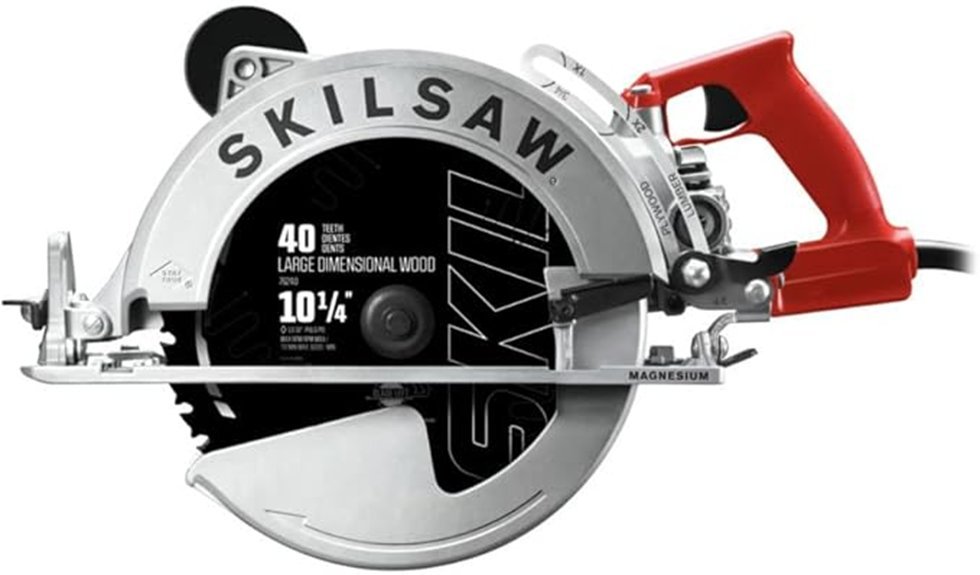
If you frequently tackle heavy-duty framing or need to rip through 4x lumber in a single pass, the SKIL Magnesium 10-1/4‑inch Worm Drive (SPT70WM‑71) is built for that work—its 15‑amp dual‑field motor and magnesium housing deliver the power and durability pro and serious hobbyist woodworkers want, while the included 10‑1/4‑inch SKILSAW blade and Twist Lock plug let you get to work right away with fewer setup worries. You’ll appreciate clean single-pass cuts, a balanced 16.5-pound build, and bevel capability up to 51 degrees; minor bevel tuning may be needed for precise compound work. Warranty and returns are straightforward.
Best For: Professionals and serious hobbyist woodworkers who need a durable, high‑power saw to make clean single‑pass cuts through 4x lumber and other heavy framing materials.
Pros:
- Powerful 15‑Amp dual‑field motor and 10-1/4″ blade that cleanly rips through 4x lumber in one pass.
- Magnesium housing provides durable, lightweight balance (16.5 lbs) for smoother handling.
- Includes SKILSAW blade and Twist Lock plug for quick setup; 51° bevel capability adds versatility.
Cons:
- Heavier than portable circular saws, which may fatigue some users during extended overhead or one‑handed jobs.
- Bevel accuracy may require adjustment for precise compound cuts.
- Some users report mixed experiences with customer service and desire improved bevel guides.
Ryobi 18V 5-1/2 Circular Saw
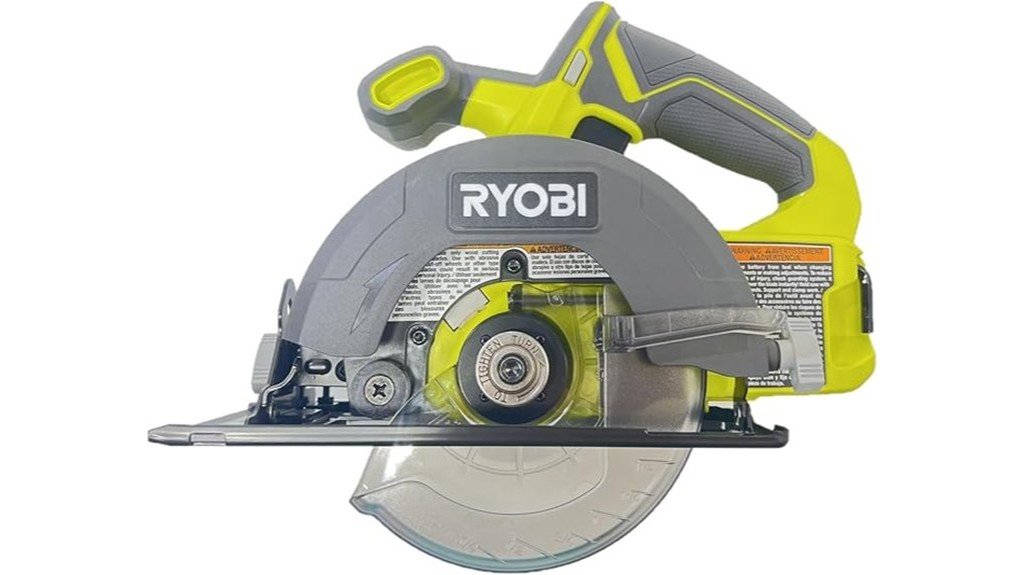
For woodworkers who value portability without sacrificing cutting power, the Ryobi 18V 5-1/2″ circular saw stands out as a compact, cordless solution that’s ideal for quick crosscuts in 2-by material and light jobsite work. You’ll appreciate its 5-1/2″ carbide-tipped, 18-tooth blade spinning at 4,700 RPM, delivering clean cuts and up to 215 cuts per charge with a compatible battery. It bevels to 50 degrees, manages a 1-11/16″ maximum depth, and weighs just 4.44 pounds, so handling stays comfortable. It’s part of the RYOBI ONE+ system, includes a vacuum adaptor option, and carries a three-year warranty.
Best For: Woodworkers and DIYers who need a lightweight, portable cordless saw for quick crosscuts in 2x material and light jobsite tasks.
Pros:
- Compact and lightweight (4.44 lbs) for comfortable handling and portability.
- 5-1/2″ carbide-tipped blade at 4,700 RPM delivers clean, fast cuts and up to ~215 cuts per charge with a compatible battery.
- Bevel capability up to 50° and compatibility with the RYOBI ONE+ system of batteries and tools.
Cons:
- Battery and charger sold separately, adding to overall cost if you don’t already own ONE+ batteries.
- Smaller 5-1/2″ blade limits maximum depth of cut (1-11/16″)—not ideal for large rip cuts.
- Some customers report packaging issues, missing components, or occasional quality concerns.
DEWALT 20V MAX Cordless 6-1/2-Inch Circular Saw (DCS391B)
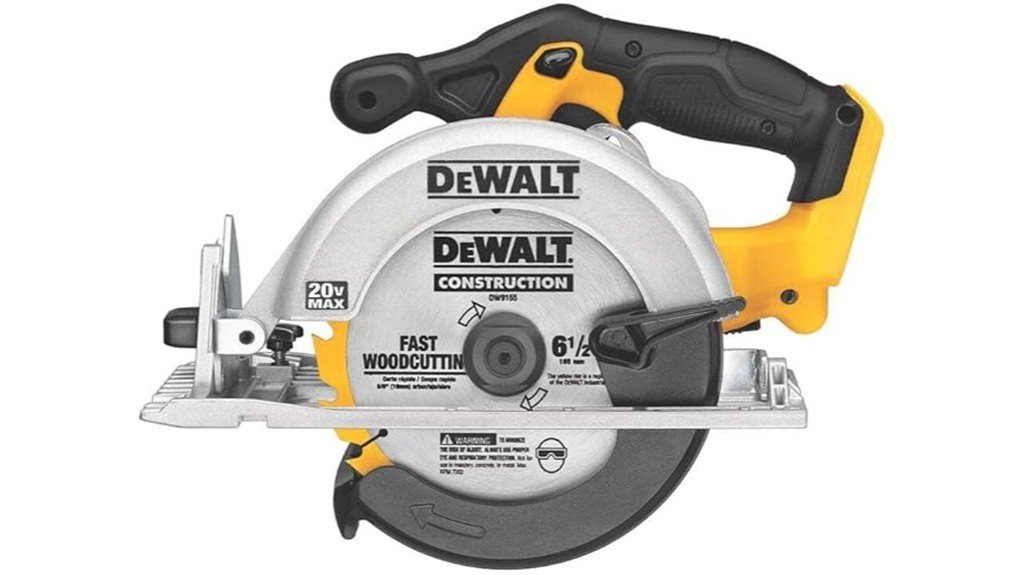
Woodworkers who prioritize portability and balanced power will appreciate the DEWALT 20V MAX Cordless 6-1/2-Inch Circular Saw (DCS391B), a compact sidewinder that pairs a 5150 RPM motor with a lightweight magnesium shoe to deliver precise, handheld cuts without weighing you down. You’ll like its 6-1/2-inch carbide-tipped blade and 0–50° bevel range for versatile angle work, plus a rubber overmolded grip that improves control. At 6.95 pounds it’s easy to maneuver, though battery life limits heavy-duty runs and a rip fence isn’t included. A quick blade brake and three-year warranty add safety and long-term value.
Best For: Woodworkers and DIYers who need a lightweight, portable cordless circular saw for precise handheld cuts and bevel work on everyday jobsite and home projects.
Pros:
- Lightweight magnesium shoe and 6.95 lb weight make it highly portable and easy to maneuver.
- 5150 RPM motor with 6-1/2″ carbide-tipped blade and 0–50° bevel range delivers versatile, accurate cuts.
- Quick blade brake and 3-year limited warranty enhance safety and long-term value.
Cons:
- Battery not included; runtime can be limited for heavy-duty or extended jobs.
- Smaller 6-1/2″ blade limits cutting depth and may require multiple passes for thicker materials.
- Rip fence sold separately, adding cost and reducing out-of-the-box ripping capability.
Factors to Consider When Choosing Circular Saws for Experienced Woodworkers
When you’re choosing a circular saw as an experienced woodworker, focus first on power and torque because they determine how cleanly and quickly you can cut through dense hardwoods. Consider blade size options and cutting capacity limits to match the saw to the thicknesses and types of cuts you commonly make, and weigh build material durability for long-term precision and safety. Finally, decide between battery versus corded power by balancing portability and runtime against consistent, higher-power performance for demanding shop work.
Power and Torque
Although power ratings like amps or volts might seem like dry numbers, they’ll tell you a lot about a saw’s ability to chew through dense hardwoods or keep a steady pace on long rip cuts, and you should learn to read them alongside torque and motor speed. You’ll look for higher amps or voltage for demanding work, but torque is the real safeguard against bogging down; it’s the rotational force that keeps the blade moving under load. Motor speed (RPM) affects cut quality and feed rate, so balance RPM with torque to avoid burning or splintering. Also consider motor design—brushless motors run cooler and longer, while dual-field designs can boost initial torque. Together, these factors prevent stalling and overheating on tough jobs.
Blade Size Options
Because blade diameter directly determines how deep and what kinds of cuts you can make, choosing the right size is one of the first decisions you’ll want to get right for serious woodworking. Blade sizes typically run from 5-1/2″ to 10-1/4″, and that range affects versatility: smaller blades suit tight spaces and lighter tasks, while larger blades handle heavier work. A 6-1/2″ blade will reach about 2-1/4″ depth, covering most common projects, whereas a 10-1/4″ option clears over 4″ for demanding applications. Remember that larger blades usually mean heavier saws, so portability and fatigue matter during long sessions. Also consider bevel capability—bigger blades often offer greater flexibility for compound and angled cuts—so match size to your workflow.
Cutting Capacity Limits
Blade diameter you picked in the previous section sets the stage, but cutting capacity depends on several interacting factors you’ll want to weigh before committing to a saw. Blade size determines maximum single-pass thickness—larger blades like 10-1/4 inches can handle 4x4s or 6x6s, while smaller blades often mean multiple passes. Bevel angle reduces depth; for example, a 6-1/2 inch blade might cut about 2 inches at 90° but only 1-3/16 inches at 45°. Higher bevel capacity—some saws tilt to 50°—adds versatility for complex joinery and trim. Motor speed, measured in RPM, affects how cleanly and quickly you move through dense stock, though sustained high RPM can overheat. Finally, consider weight and balance: lighter saws reduce fatigue, heavier tools give steadier cuts.
Build Material Durability
Durability matters more than you might expect when you’re choosing a circular saw, because the materials used in its construction determine how well the tool will stand up to regular, heavy-duty work and how comfortable it will feel during long sessions. You’ll want magnesium components if you want legendary durability without excess weight; they resist corrosion and keep handling nimble. High-speed steel blades extend service life and preserve cutting efficiency, so you replace blades less often. A lightweight saw, around 4–6 pounds, improves control and reduces fatigue during long cuts, while robust housings handle demanding jobsite abuse and thicker stock like 4x4s or 6x6s. Finally, tougher build materials deliver better stability at varied cutting angles and depths, which directly improves accuracy and overall performance.
Battery Versus Corded
When you’re weighing battery versus corded circular saws, think about where and how you’ll work most: corded models deliver steady, uninterrupted power that shines on heavy-duty cuts and long sessions, while cordless saws give you the freedom to move around job sites or remote locations without hunting for outlets. You’ll favor corded if consistent torque and unlimited runtime matter, especially for dense lumber or repetitive ripping. Choose cordless when portability, lighter weight, and reduced user fatigue improve productivity on-site, remembering battery charge limits can reduce cutting depth or runtime. Modern lithium-ion packs close the gap with faster recharge and longer life, but plan for spare batteries during extended work. Match power source to task profile, workflow, and access to electricity for the best results.
Precision and Controls
After you’ve weighed power source and runtime, focus next on precision and control, since those determine how cleanly and confidently you’ll execute complex cuts. Check bevel range first: models that angle up to 51° let you tackle compound and trim work without fuss. Match blade size and type to your projects — a 10-1/4″ blade cuts thicker stock in one pass, improving accuracy and workflow. Consider weight and balance: a 4.4 lb saw boosts maneuverability for overhead or rip cuts, while a 16.5 lb model can steady long, straight cuts. Ergonomic grips and well-placed controls reduce fatigue and help you hold lines precisely. Finally, prioritize a fast-acting blade brake; it raises safety and lets you stop exactly where precision matters.
FAQ
Can These Saws Be Used Safely in Metal-Cutting Jobs?
1. Can circular saws be used for cutting metal?
Yes, some circular saws can cut metal if equipped with the appropriate blade designed for that material.
2. What type of blade should I use for cutting metal with a circular saw?
Select a blade specifically rated for ferrous or nonferrous metal to ensure effective and safe cutting.
3. Do I need to adjust my cutting technique when using a circular saw on metal?
Yes, you should slow your feed rate to maintain control and reduce the risk of damage to the saw or blade.
4. Is it safe to use woodworking blades on metal?
No, avoid using high-tooth woodworking blades for metal cutting as they are not designed for that purpose and can cause issues.
5. What safety gear should I wear when cutting metal?
Always wear eye protection, ear protection, and respiratory protection to safeguard against debris and noise.
6. How should I secure my workpiece when cutting metal?
Clamp the workpiece securely to prevent movement during cutting, which enhances safety and accuracy.
7. What precautions should I take regarding sparks when cutting metal?
Control sparks by ensuring a clear workspace and keeping flammable materials away from the cutting area.
8. Should I use coolant or dust control when cutting metal?
Yes, having coolant or dust control measures in place is essential for prolonged cuts to maintain blade performance and reduce heat.
9. What should I do if I’m unsure about using my saw for cutting metal?
Consult the saw’s manual for specific guidance on its capabilities and limitations regarding metal cutting.
10. Can I use any model of circular saw for metal cutting?
No, not every circular saw model is suitable for metal cutting; check compatibility before proceeding.
11. Are there any specific maintenance tips for circular saws used on metal?
Regularly inspect and maintain the blade and saw to ensure they are in optimal condition, which can prolong their lifespan and improve cutting efficiency.
What Is the Typical Blade Change Time for Each Model?
1. What is the average blade change time for saw models?
Typically, blade change time ranges from 30 to 90 seconds, depending on the model and mechanism used.
2. How long does it take to change blades on tool-free models?
Models with tool-free lever locks or quick-release spindles can be changed in about 30 to 45 seconds.
3. What is the blade change time for models requiring tools?
Saws that require wrenches or shaft-lock engagement generally take 60 to 90 seconds for blade changes.
4. Do high-end models have faster blade change times?
Yes, high-end professional models often feature improved clutches and clear markers that enhance the speed of blade changes.
5. What factors can influence my blade change time?
Personal practice, maintaining clean blades, using the correct wrench, and following the user manual can significantly affect your blade change efficiency.
6. How can I reduce my blade change time?
Regular practice and familiarity with your specific model, along with proper maintenance, help streamline the blade changing process.
7. Are there any features that make blade changes easier?
Tool-free mechanisms and quick-release spindles are specifically designed to facilitate faster blade changes.
8. Can I change blades without looking at the manual?
While you can attempt blade changes without the manual, referring to it ensures safe and efficient practices specific to your model.
9. Is it safe to change blades quickly?
Prioritizing safety is crucial; always follow the manual instructions and avoid rushing to prevent accidents.
10. What should I do if I experience difficulty changing blades?
If you encounter issues, check that you’re using the correct tools and follow the manufacturer’s guidelines for troubleshooting.
Do These Saws Accept Aftermarket Laser Guides?
1. Do all circular saws accept aftermarket laser guides?
No, compatibility varies by model and mounting method, so not all circular saws will work with aftermarket laser guides.
2. What types of laser guides are compatible with circular saws?
Magnetic or clamp-on laser guides are generally more compatible, while molded mounts may require specific manufacturer brackets.
3. How can I check if a laser guide will fit my saw?
Before purchasing, check the blade guard clearance and trigger placement to ensure there is enough space for the laser guide.
4. Do I need to consider power requirements for laser guides?
Yes, confirm the battery or power needs of the laser guide to ensure it will operate correctly with your circular saw.
5. Will installing a laser guide void my saw’s warranty?
Typically, you can retain your warranty if the installation is non-invasive, but it’s best to verify with the saw’s manual or manufacturer.
6. What should I look for in a laser guide for my circular saw?
Look for compatibility with your saw model, installation method, and whether it meets your visibility and accuracy needs.
7. Are there specific brands known for compatible laser guides?
While many brands offer laser guides, it’s essential to check user reviews and compatibility information for your specific circular saw model.
8. Can I use any laser guide with my saw?
Not all laser guides are universally compatible; ensure that the model you choose is designed for use with your specific circular saw.
9. Is it easy to install aftermarket laser guides?
Many aftermarket laser guides are designed for easy installation, but the complexity can vary based on the mounting method and saw model.
10. Where can I find aftermarket laser guides for circular saws?
Aftermarket laser guides can be found at hardware stores, online retailers, and specialty tool shops that offer various brands and models.
Are There Cordless Models Compatible With Professional Dust Extractors?
1. Can cordless circular saws connect to professional dust extractors?
Yes, many cordless circular saws are designed to be compatible with professional dust extractors, but proper fittings and protocols must be matched.
2. What types of adapters are available for cordless saws and dust extractors?
Many manufacturers provide tool-to-vacuum adapters or integrated dust ports that fit hoses sized between 35–38 mm.
3. Are there specific brands that use unique connectors for dust extraction?
Yes, some systems utilize brand-specific connectors to ensure an optimal seal and airflow for effective dust collection.
4. How can I ensure my saw is compatible with my dust extractor?
Check the machine specifications for compatibility details, required adapters, and recommended suction power to confirm the fit.
5. Why is it important to match dust extractor specifications?
Matching specifications guarantees effective dust capture, leading to safer work conditions and cleaner cuts during various tasks.
6. What should I look for in a dust extractor for cordless tools?
Look for features such as adjustable suction power, compatible hose sizes, and the availability of necessary adapters.
7. Can I use any dust extractor with my cordless circular saw?
Not all dust extractors will work with every cordless saw; compatibility depends on the fittings and specifications of both tools.
8. How does using a dust extractor improve my work environment?
Using a dust extractor minimizes airborne dust, enhancing safety and maintaining a cleaner workspace during cutting tasks.
9. Are there any specific features to consider for portable dust extraction?
For portable dust extraction, consider weight, ease of setup, hose length, and whether it can effectively handle the dust created by cordless tools.
10. What maintenance should I perform on dust extraction systems?
Regularly check and clean filters, inspect hoses for blockages, and ensure all connections are secure for optimal performance.
Can Any Be Adapted for Left-Handed Users Without Modification?
1. Are circular saws designed for left-handed users?
No, most circular saws are primarily designed for right-handed users, which means they often feature controls and blade guards that favor right-handed operation.
2. Can circular saws be modified for left-handed use?
While some circular saws can be adapted for left-handed users, this often requires modifications such as swapping handles or relocating blade guards, which may need additional tools or parts.
3. What modifications can be made to a circular saw for left-handed users?
Common modifications include changing the handle position, adjusting blade guards, or using left-hand blades if the model allows for it.
4. How can I find a suitable circular saw as a left-handed user?
Look for models that have reversible guards or side-exit dust ports, which can enhance usability for left-handed individuals.
5. Is it safe to modify a circular saw for left-handed use?
Modifying a circular saw can be safe if done correctly, but it’s important to consult the manual or a dealer to ensure that any changes maintain the tool’s safety standards.
6. Are there any circular saws specifically designed for left-handed users?
There are limited options on the market that cater specifically to left-handed users, so it’s essential to research various models and their features.
7. What should I test before purchasing a circular saw as a left-handed user?
Before buying, test the ergonomics and overall feel of the saw to ensure it meets your comfort and usability needs as a left-handed user.
8. Do left-handed blades improve the performance of circular saws?
Left-handed blades can enhance performance for left-handed users, particularly in models that support them, as they may offer better visibility and control during operation.
9. Can I convert any circular saw for left-handed use?
Not all circular saws can be converted easily; some may require extensive modifications that are not feasible or safe.
10. What should I do if I’m unsure about modifying my circular saw?
If you’re unsure about the modifications, it’s best to consult with a professional or contact the manufacturer for guidance on safe conversion options.
Final Thoughts
You’ll find each of these saws brings distinct strengths: the SKIL worm drive delivers extraordinary cutting capacity and durability for big, precise jobs; the Ryobi gives you cordless convenience and nimble handling for jobsite mobility; and the DEWALT balances control, quick blade braking, and dependable power for intricate work. Match your primary tasks to the saw’s advantages—capacity, portability, or braking/control—and you’ll get pro-level performance that fits your workflow and expectations.